
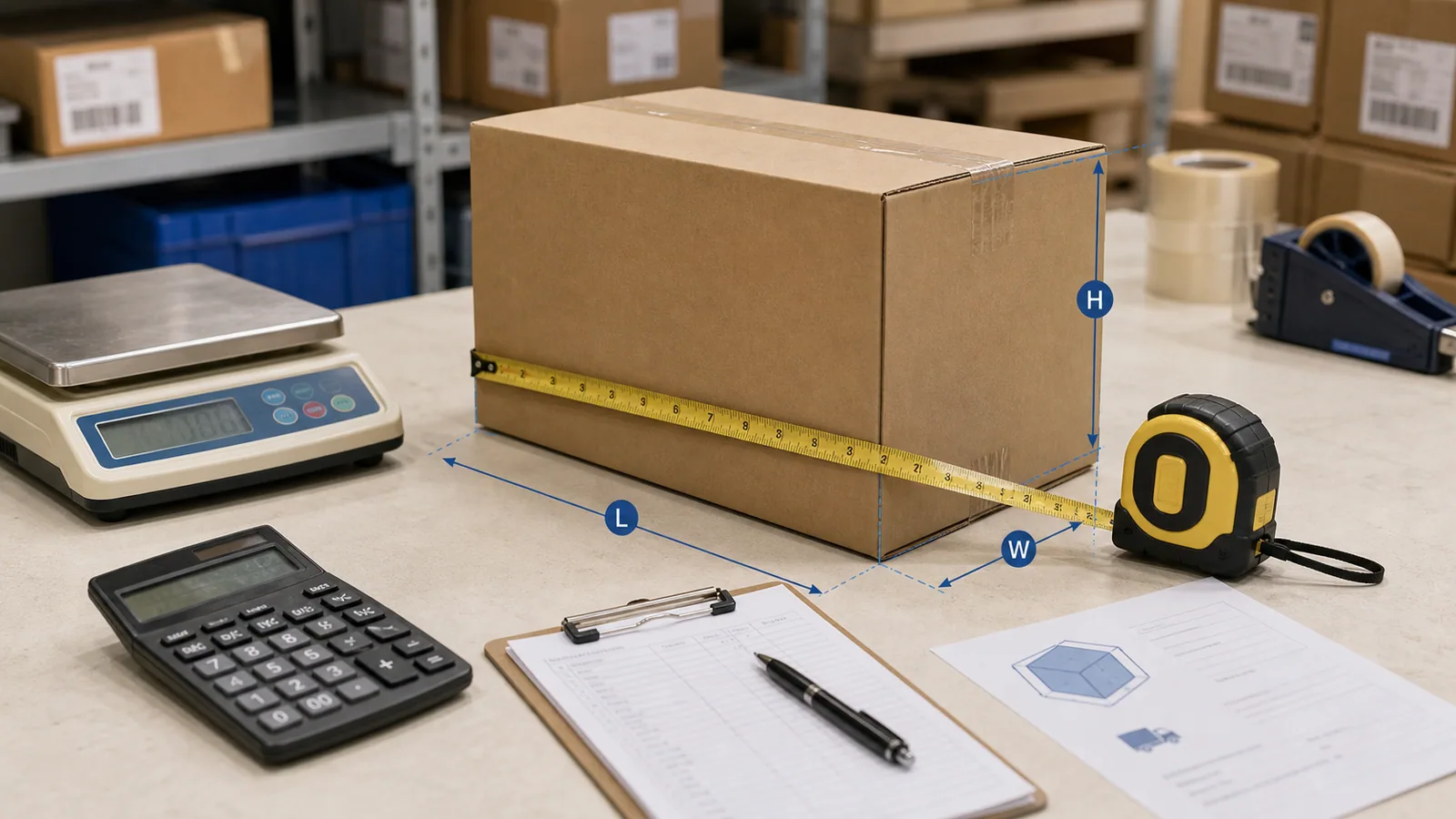
How is CBM calculated?
Multiply carton length × width × height in meters, then multiply by carton count. With centimeters, use L × W × H × cartons ÷ 1,000,000.
Check carton volume, volumetric weight, actual weight, and chargeable weight before you ask for a China shipping quote or pay a 1688 supplier.
Product clue
Optional context only. Product matching cannot replace measured packed length, width, height, gross weight or carton count, and it will not change the CBM result.
Enter valid carton data, then calculate to see the shipment decision.
Quick answer
The useful output is not just a number. It shows what changes the decision and what to do before supplier payment.
Multiply carton length × width × height in meters, then multiply by carton count. With centimeters, use L × W × H × cartons ÷ 1,000,000.
For express and air planning, it is usually the higher of actual and volumetric weight. The final basis still depends on the carrier, route divisor, and warehouse measurement; sea/LCL is planned by volume or W/M rules instead.
1 CBM is exactly 1 cubic meter of volume, not a fixed number of kilograms. Actual and chargeable weight depend on product density, packing, shipping mode, and the route divisor.
Check whether every carton fits the selected load unit, then carry the measured carton data into a route-aware freight estimate. Confirm the final quote after warehouse measurement and carrier acceptance.
Billing rules
Choose the shipping mode before calculating. These are transparent planning defaults, not a carrier quote.
L × W × H ÷ 5,000
Each parcel is commonly compared separately, so a mixed shipment can be partly actual-weight and partly volumetric.
The carrier divisor, rounding, and parcel rules can differ.
L × W × H ÷ 6,000
Planning compares total gross weight with total volumetric weight for the consolidated shipment.
The final route or carrier divisor can differ.
CBM · no kg divisor
Plan by shipment volume or W/M rules. FCL decisions also need a physical carton-fit check.
Forwarder minimums and route rules may apply.
Container capacity
Use the physical carton-fit result in the calculator. CBM alone cannot prove that every carton will pass the door, orient correctly, or load safely.
Planning use
Smaller FCL plans and denser cargo
Planning use
Higher-volume FCL plans without extra height
Planning use
Higher-volume or taller-carton plans
Planning reference only. Door opening, palletization, carton orientation, void space, weight limits, equipment variation, and loading method reduce usable capacity.
Risk boundaries
A large, light carton can bill higher than its actual weight.
Shows the chargeable basis and a light-bulky flag.
Express and air use route divisors; sea/LCL is planned by CBM or W/M, not a kilogram divisor.
Switch modes to see the relevant planning basis, then confirm the final carrier or forwarder rule.
Battery, liquid, powder, or magnet signals can change route availability.
Routes these to a manual shipping check.
Supplier estimates may not match the packed goods.
Keeps quote confidence low until cartons are measured.
FAQ
CBM means cubic meter. For a carton it is length × width × height in centimeters divided by 1,000,000, then multiplied by carton count.
There is no fixed conversion. 1 CBM is one cubic meter of volume; its actual and chargeable weight depend on product density, packing, shipping mode, route rules, and measured cartons.
They usually describe the same size-based shipping concept. The calculated kilograms still depend on the divisor and whether the carrier assesses each parcel or a consolidated shipment.
Volumetric weight is a shipping weight based on package size. Carriers may charge the higher of actual weight and volumetric weight.
Use the divisor as a planning assumption. Express and air routes often use different divisors, and the final divisor depends on carrier, line, route, and quote terms.
Final quotes may use measured carton size and actual gross weight, not supplier listing estimates. Repacking can also change carton size and protection.
No. It calculates shipping-readiness metrics and risk flags. It does not guarantee freight price, carrier acceptance, route availability, customs clearance, or delivery time.
Submit the product link, keyword, or image clue, destination country, carton dimensions, carton count, gross weight, shipping preference, and any battery or restricted-goods signal.
Related pages
Send the product link, destination, carton data, and gross weight. Supplymo turns the CBM result into a practical route and cost decision before assisted ordering.
Reference definition
CBM is shipment volume in cubic metres: packed length × width × height, converted to metres, then multiplied by carton count. Volumetric weight turns that space into a comparison weight. Carriers commonly use divisors such as 5,000 or 6,000 for centimetre measurements, but the active divisor belongs to the carrier and service. The chargeable weight is normally the greater of actual gross weight and the carrier's volumetric result, subject to its current rounding and minimum rules.
Use measured packed cartons, not supplier product dimensions. Recheck the carrier divisor, rounding, minimum charge and route before treating either weight as quoted freight.
See what 1688 listing weight fields did and did not verifyCBM is packed shipment volume in cubic metres. A freight quote may instead use chargeable weight, commonly the greater of actual gross weight and the carrier's own volumetric-weight calculation.
Supplymo. "CBM, Dimensional & Volumetric Weight Calculator for 1688." https://supplymo.com/cbm-calculator. Accessed 12 September 2026.