
Pre-shipment inspection in Yiwu, by the team that handles your order
Every order we handle gets a basic arrival check. Full inspection is quoted separately. You get photos, and nothing ships until you say so.
 Bobby handles your requestReplies within one business day · WhatsApp
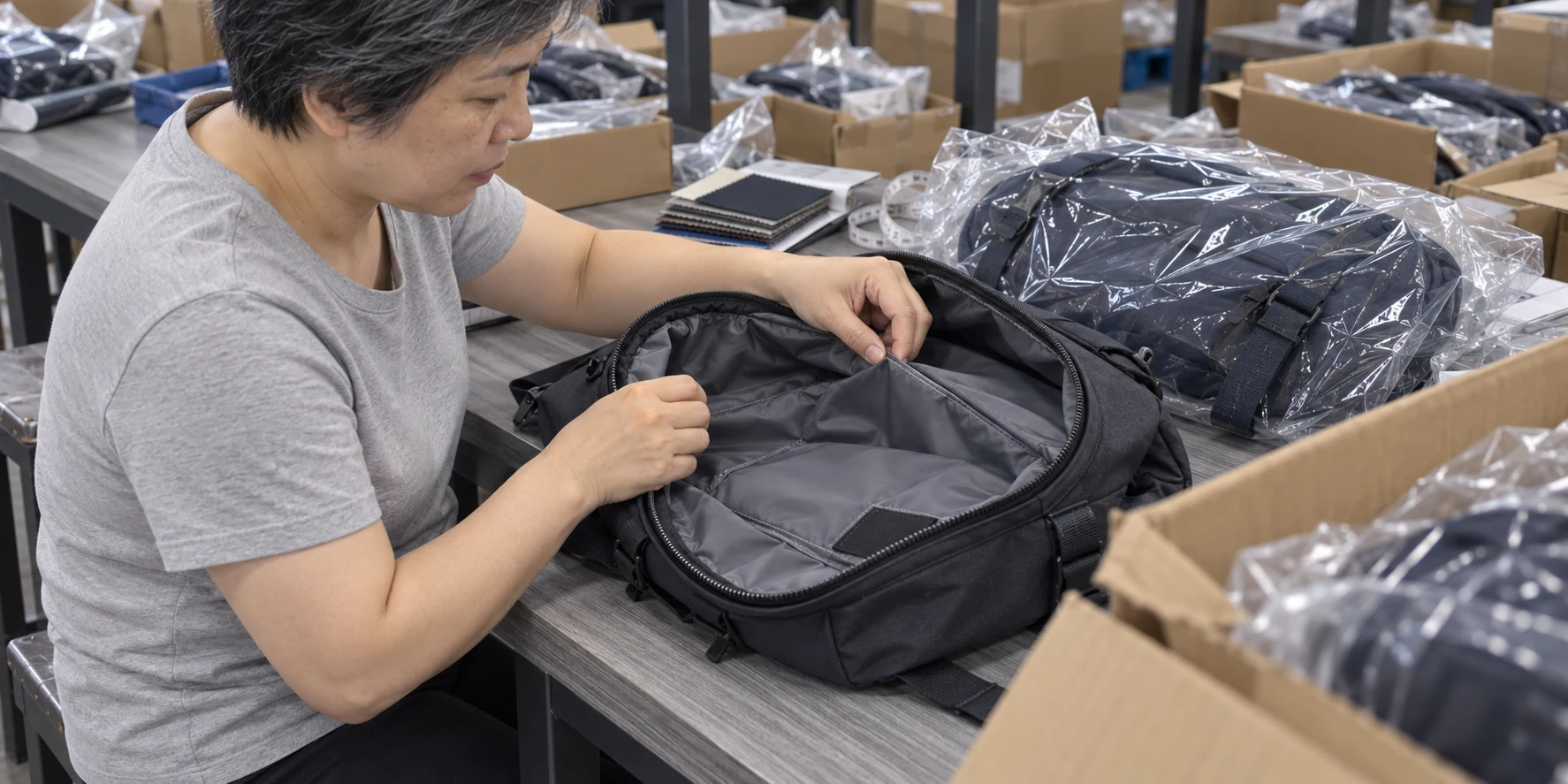
Why inspect before shipping
Once goods are on a ship, a missing label is a claim across the world. In China it is a phone call to the factory.
Most problems are simple, like a different material or a short carton count. They are cheap to catch at the warehouse and expensive at your door.
How the check works
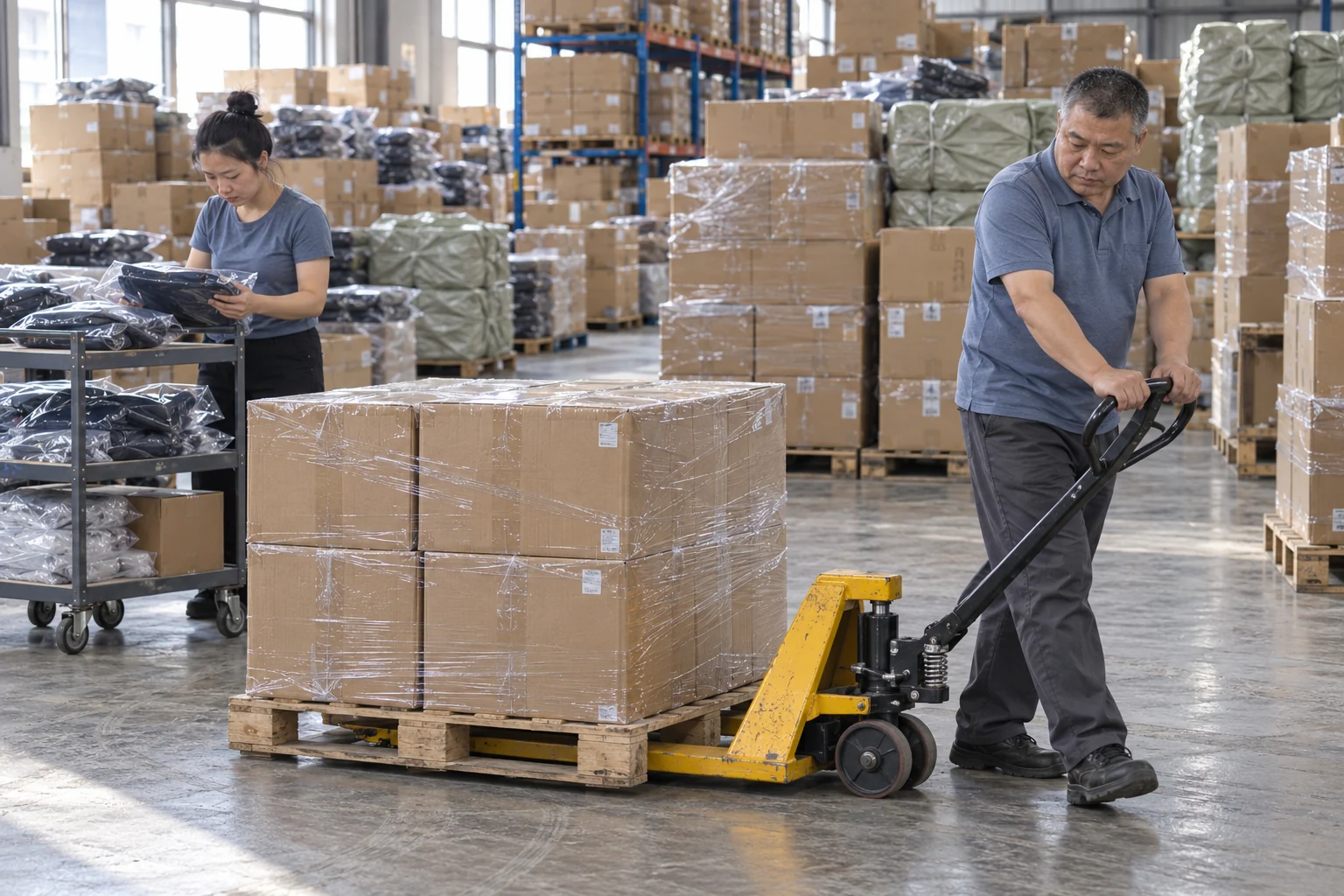
The basic check happens at our partner warehouse in Yiwu when goods arrive.
- 01Confirm the specificationApproved sample, colours, sizes, packaging and labels.
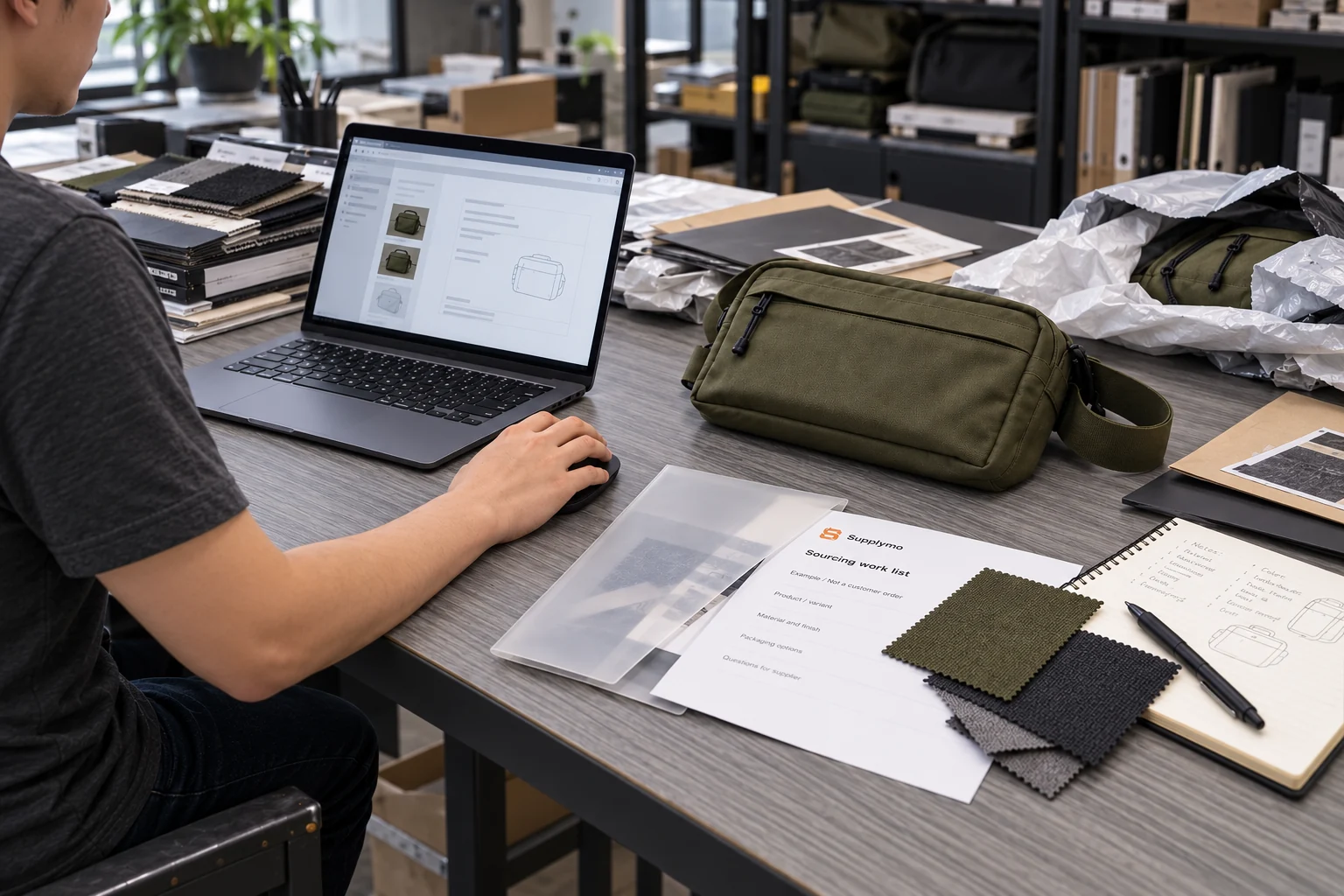
- 02Count what arrivedCartons and units counted against the supplier invoice.Arrival count · phone standsExampleInvoice Counted Units240240Cartons1010Damaged–0
- 03Check appearance and functionUnits opened and compared with the approved sample.
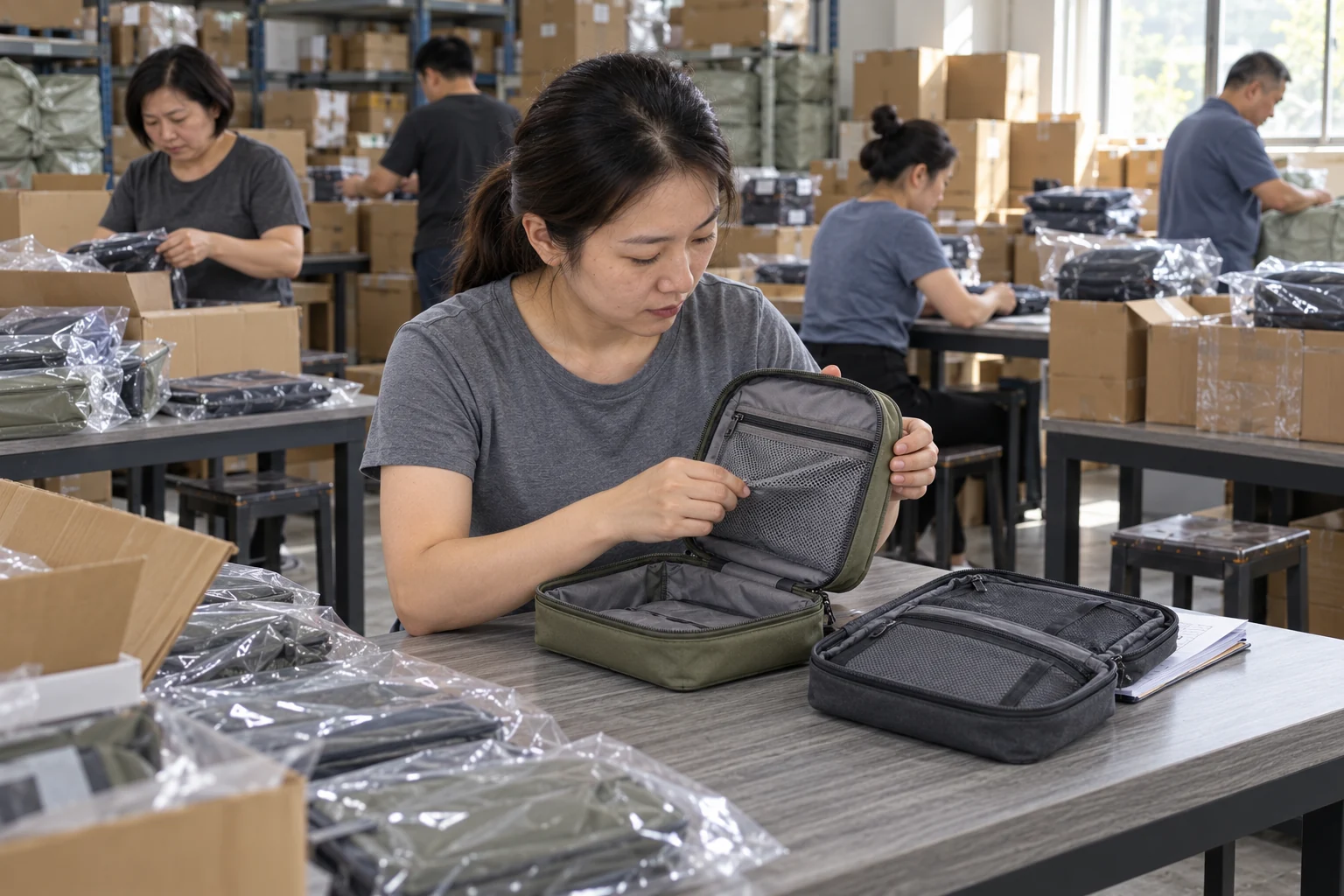
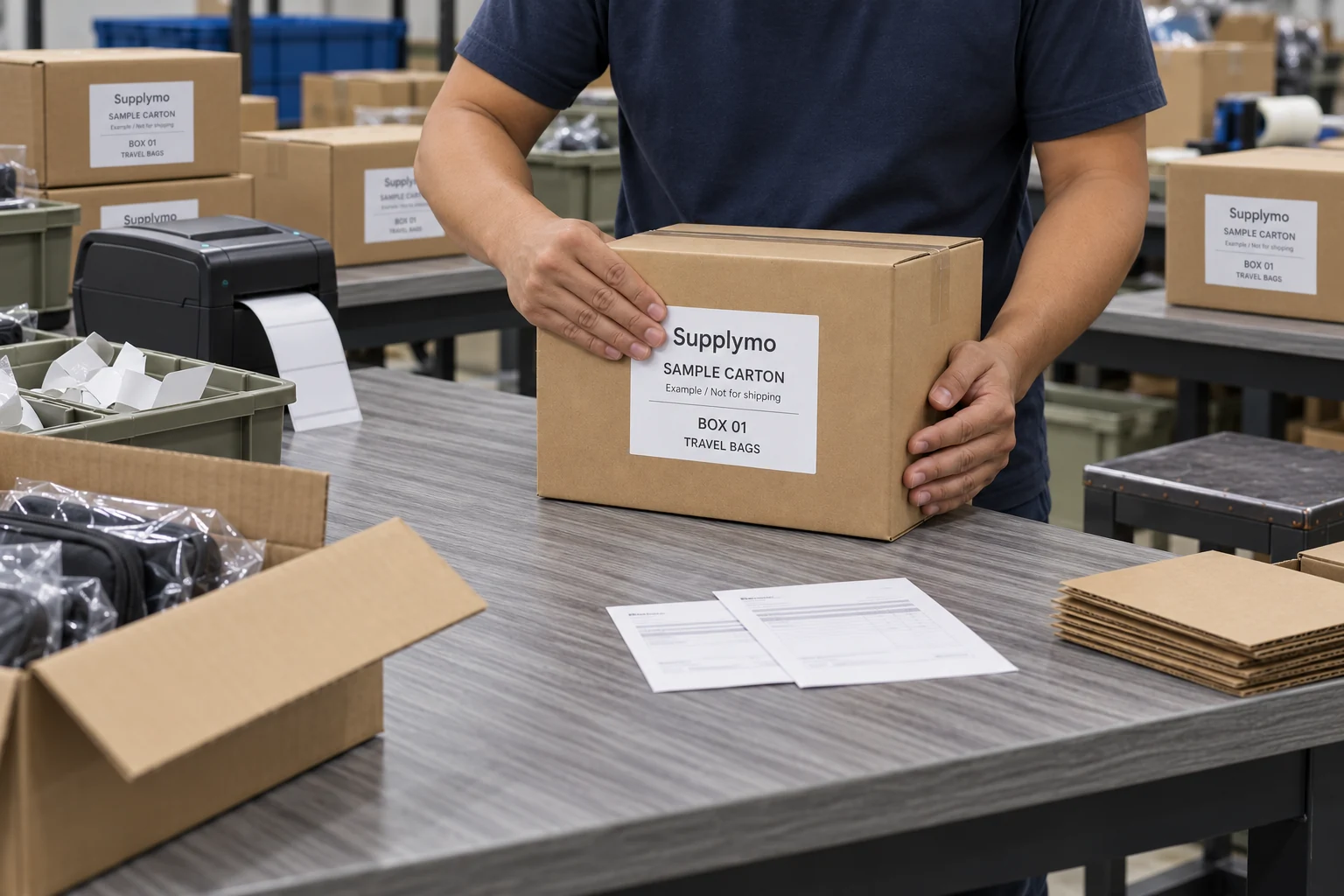
- 04Check packaging and labelsInner packs, carton marks, barcodes and any FBA labels.CARTON 03 / 20
SKU · SILICONE MAT
QTY 25 PCS
MADE IN CHINASKU-MAT-4030 · Example - 05Photograph and reportPhotos and a short list of anything that does not match.Arrival checkExampleCount
240/240Marks
matchSize
in specHinge !
stifferYour decision - 06Ship only on your written approvalIf something is wrong, we take it up with the supplier first.Arrival check · phone standsExample240 of 240 countedCarton marks match!Hinge stiffer: fix agreed with supplierYou: "Approved, ship it." · in writing
What you get
A photo report on your phone, then your sign-off
Photos of what we checked and anything that does not match. Tap a photo to see the note.
The hinge on some opened units is stiffer than on the approved sample.
We ask the supplier for a fix. Nothing ships until you decide.
What a sample check can and cannot catch
AQL checks a random sample, so a lot that passes can still hold a few faulty units within the limits you agreed.
Usually catches
A different colour or material than the sample
Short counts and wrong carton marks
Missing or wrong labels
A fault that repeats across many units
Cannot promise
That every single unit is fine
That your product meets a legal rule
Price
Basic arrival check
Included
Count and visual check at our partner warehouse on every order we handle.
Full pre-shipment inspection
On request
AQL sampling at the factory before the balance payment. Quoted before you pay.
Goods you bought yourself
3%
Order follow-up: 3% of goods, minimum $49 per order.
What we don't do
In detail
What an inspection summary looks like
Inspection summary
- Product
- Silicone kitchen mat, one size, two colors
- Order
- 400 units in 10 cartons
- Plan
- General level II. AQL 2.5 for major defects, 4.0 for minor, zero critical defects accepted.
- Sample
- 50 units pulled at random from all 10 cartons
| Check | Found | Limit | Result |
|---|---|---|---|
| Carton and unit count | 10 cartons, 400 units | Matches the supplier invoice | Pass |
| Critical defects | 0 | 0 accepted | Pass |
| Major defects | 2 (edge not trimmed) | Up to 3 accepted | Pass |
| Minor defects | 4 (light surface marks) | Up to 5 accepted | Pass |
| Size and color against the approved sample | Matches on all 50 units | Approved sample | Pass |
| FNSKU label on each sampled unit | All scan | Your label file | Pass |
| Suffocation warning on poly bags | Missing on 6 bags | Amazon prep rules | Needs your decision |
Result: Within the agreed limits for defects. One packaging problem needs your decision before shipping.
We suggest re-bagging the lot with printed warnings and sending new photos. The supplier replaces the 2 units with untrimmed edges.
Sampling
How the AQL level is chosen
A full inspection does not open every unit. The inspector pulls a random sample, counts the defects and compares the count with limits agreed before the inspection. Most inspectors in China use the tables in ISO 2859-1. The US version is ANSI/ASQ Z1.4. Both come from the older MIL-STD-105 tables and are read the same way.
- 1
The lot size sets the sample
The number of units in the order gives a code letter. The code letter gives the number of units to pull at random.
- 2
The inspection level sets how strict the sampling is
The standard has general levels I to III and special levels S-1 to S-4 for small samples. Level II applies unless you choose another. A higher level means a bigger sample.
- 3
The AQL value sets the pass line
You pick an AQL value for each defect class. With the sample size, that value points to a pass number and a fail number in the table.
- 4
We write the plan down first
The level, the AQL values and the defect list go into the checklist you approve. The pass line is fixed before anyone opens a carton.
Many buyers of everyday consumer goods pick 2.5 for major defects and 4.0 for minor ones, and accept zero critical defects. That habit comes from the trade, and the standard leaves the choice to you. A costly or safety-sensitive product usually gets a stricter value, which means fewer defects allowed.
| Lot size | Code letter | Units sampled | AQL 2.5: pass / fail | AQL 4.0: pass / fail |
|---|---|---|---|---|
| 281 to 500 | H | 50 | 3 or fewer / 4 or more | 5 or fewer / 6 or more |
| 501 to 1,200 | J | 80 | 5 or fewer / 6 or more | 7 or fewer / 8 or more |
| 1,201 to 3,200 | K | 125 | 7 or fewer / 8 or more | 10 or fewer / 11 or more |
| 3,201 to 10,000 | L | 200 | 10 or fewer / 11 or more | 14 or fewer / 15 or more |
Defect classes
Critical, major and minor defects
Critical
Could hurt the user, or breaks a rule your market sets for the product.
Examples: A sharp burr on a metal edge. Exposed wire at a plug. A safety warning your market requires that is missing.
Usually none accepted. One critical defect fails the lot.
Major
Likely to cause a return, or makes the unit hard to sell.
Examples: A zip that jams. A color or size that differs from the approved sample. A lid that will not close. A barcode that does not scan.
Pass line from the AQL value you chose for major defects.
Minor
Cosmetic. The unit works and most customers would keep it.
Examples: A small scuff on a hidden side. A loose thread end. Print that is slightly uneven but easy to read.
Pass line from the AQL value you chose for minor defects.
You decide which class each defect belongs to. We write the list with you before the inspection, because the same flaw can be major on a gift item and minor on a spare part.
Labels and marks
Label checks for your market
Our check covers the mark itself. Whether your product needs it, or truly meets the rule behind it, is for the official source or a test lab to confirm.
United States
Most imported goods, or their containers, must show the country of origin in English, such as Made in China. We check the mark is on the unit or the retail pack where you asked for it.
European Union
CE marking applies only to products covered by a CE rule. Electrical and electronic goods also carry the crossed-out wheeled bin symbol. We check the marks you listed are printed and readable.
Great Britain
Some product types need UKCA or CE marking. GOV.UK explains when CE is still accepted. We check whichever mark you chose is on the goods.
Amazon FBA
Unit barcodes and poly bag warnings are checked against Amazon's current prep pages. Our Amazon FBA page lists the rules we check.
Limits
What our check does not cover
Lab testing
Chemical, material and electrical safety tests are outside our check. If your market needs a test report, a third-party lab can do it, quoted before you pay.
Certificates
We do not issue CE, FCC or other certificates. A mark printed on a box does not prove the product meets the rule.
Every single unit
AQL sampling checks a sample. A lot can pass and still hold a few defective units, within the limits you agreed.
Faults that show up later
Wear after weeks of use, or faults inside sealed parts, are outside a visual and function check.
Your listing and legal duties
Product rules, listing claims and marketplace approval stay with the seller. We point out visible risks when we see them.
If our arrival check misses a problem it should have caught, that is on us. We replace or refund the affected units.
Questions
Are you a third-party inspection company?
No. We are a sourcing team with a stake in the order. If your buyer wants an independent report, tell us before the order.
Is the check done at the factory or the warehouse?
The basic check happens at our partner warehouse in Yiwu. Factory inspection before the balance payment is quoted separately.
What happens if the goods fail?
You get photos and notes, and we ask the supplier for a fix or a discount. Nothing ships until you decide.
If the lot passes AQL, is every unit fine?
Not always. A passing lot can hold a few faulty units within the agreed limits. If our check misses a problem it should have caught, we replace or refund the affected units.
Can you inspect goods I bought myself?
Yes. Send them to our partner warehouse and use order follow-up. The fee is 3% of goods, minimum $49 per order.
Do you issue certificates or lab test reports?
No. We check goods against your specification. If your market needs a lab test report, we can arrange a third-party lab and quote it before you pay.
Which AQL level should I choose?
Most consumer goods orders use general inspection level II, AQL 2.5 for major defects and 4.0 for minor ones, and zero critical defects. A costly or safety-sensitive product usually gets a stricter value. We agree the plan with you in writing before the inspection.
Do you check labels and markings for my market?
Yes. Our check covers the marks on your checklist, such as a country of origin mark or Amazon unit labels. Whether your product needs a mark, or meets the rule behind it, is for the official source or a test lab to confirm.
Often used together
Tell us what needs checking
- Tell us the product, the order size and what matters most.
- We agree the checklist with you and quote any extra inspection.
- You get photos and a short report before anything ships.
Bobby reads your requestWe reply within one business day.