Check 1688 supplier risk before you pay
A 1688 supplier can be real while the order is still risky. Supplymo helps small sellers review visible supplier, listing, factory-claim, MOQ, document, package, category, and route signals before a supplier payment starts.
- Free check — full report $29
- Request info / sample / stop
- No supplier payment before review
Risk signals
Photos, variants, MOQ, category, destination, prep, logistics
Output
Low, medium, high, manual review, or stop
Boundary
Visible risk review, not full factory audit
Check supplier risk
Screen the supplier before you pay
Live 1688 data. We compare a supplier against ~30 peers for the same product. This is a pre-payment screen on public signals, not a supplier certification — always sample before bulk payment.
Can someone check a 1688 supplier before I pay?
Yes. Supplymo can review the visible supplier page, product listing, MOQ, SKU split, factory claim, certificates, destination, and route assumptions before supplier payment, then return a continue, request-info, sample-first, manual-review, or stop decision.
Short answer
Use supplier risk check to decide whether a visible 1688 listing is ready for quote, needs request-info, should start with a sample, needs manual review, or should stop before payment.
Is a 1688 supplier legit?
1688 is a real domestic China B2B marketplace, but that does not prove every supplier, factory claim, product listing, document, or payment path is safe for an international buyer.
How to verify before paying
Collect the supplier shop link, visible company name, product match evidence, MOQ and SKU split, package data, certificates when needed, destination country, and sales-channel risk before approving a quote.
Factory or trading company?
Treat factory status as a signal to verify, not a promise. MOQ, product focus, business scope, production photos, sample willingness, and communication records should all be checked before payment.
What changes the result
Photo mismatch, unclear supplier role, MOQ above target quantity, brand or IP risk, missing certificates, restricted goods, packaging gaps, and destination rules can all change the decision.
Next step
Attach the supplier page, product clue, destination, quantity, SKU count, and risk concerns to a product check so the quote can preserve assumptions and missing evidence.
What this does not replace
Supplier risk is separate from source match and restricted-product review. A matching image does not make the seller safe, and a real seller does not make the product importable or platform-ready.
Best fit
Best for practical risk screening before purchase
The goal is to stop obvious bad routes and flag uncertainty before quote approval.
Listing mismatch
Photos, specs, and variants may not match the buyer product.
Factory vs trader
Factory claims, catalog breadth, MOQ, and business scope need evidence.
MOQ risk
Risk rises when MOQ is too high for a first test.
Restricted category
Batteries, cosmetics, branded goods, liquids, and magnets need care.
Prep requirement
Packaging and labels can create China-side work.
Route fit
Shipping and destination constraints affect viability.
Workflow
Supplier risk check workflow
- 1
Submit
Check record1688 URL or product clue
- 2
Review
Risk flagsListing, supplier page, category, MOQ, prep, route
- 3
Decide
RecommendationContinue, sample first, manual review, or stop
- 4
Quote
Private quoteIf viable, keep risk assumptions visible
- 5
Order
Account recordEvidence and status remain attached to order
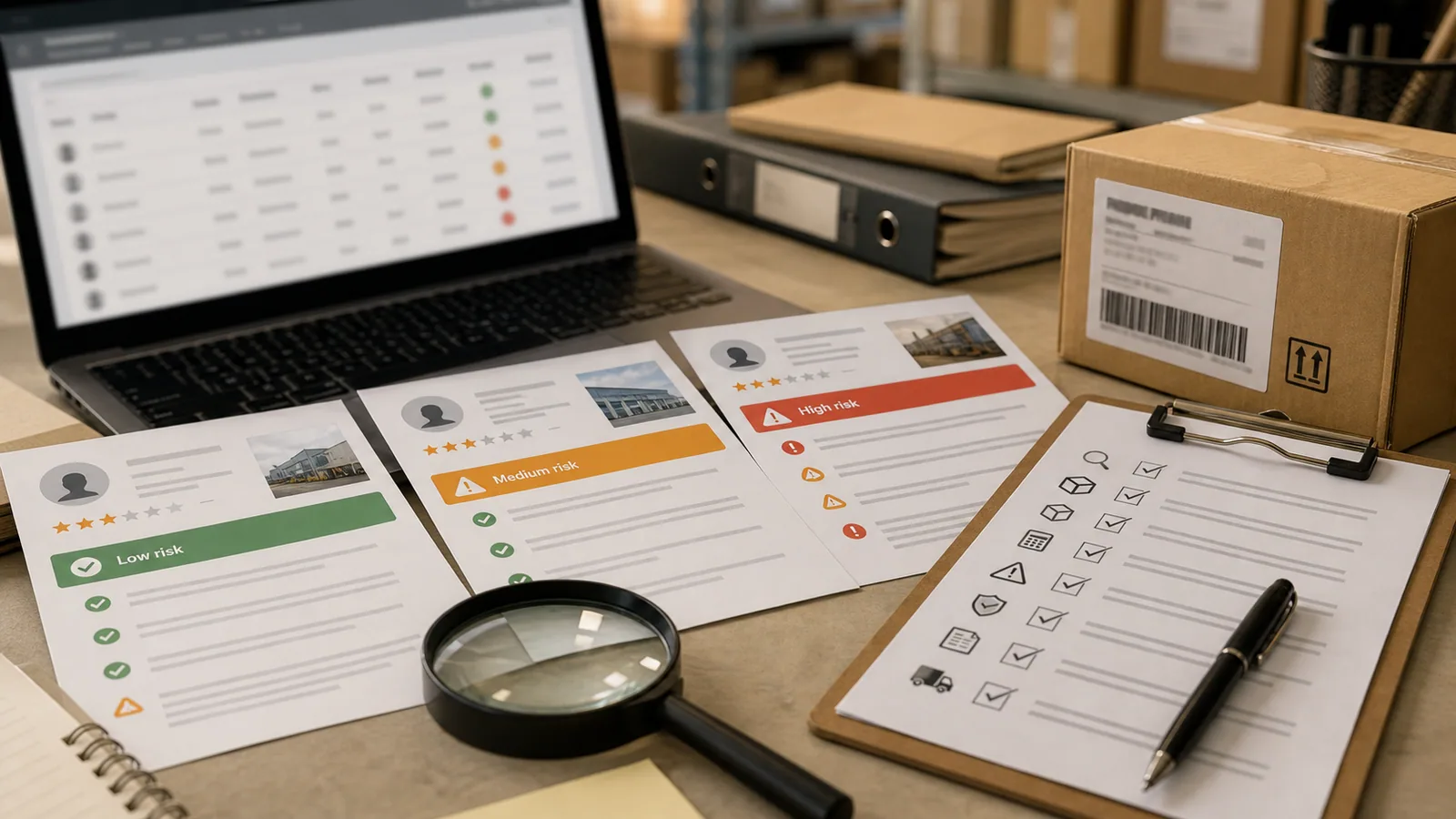
Evidence before approval
Visible page, product, and route clues stay attached to the decision.
Keep visible
Risk categories that should not be hidden
Branded goods
Can create platform, import, and IP problems
Decline or manual review
Factory claim
A supplier may be a factory, trader, reseller, or mixed operator
Request evidence before treating the quote as ready
Supplier mismatch
Page may not match product expectations
Ask for evidence before buying
Source-match gap
Similar images do not prove same factory, material, quality, or documents
Use source-match check before quote
Restricted-product gap
A supplier may sell a product that a carrier, platform, or destination will still reject
Use restricted-product checker
Unclear specs
Materials, dimensions, and variants can be vague
Keep assumptions in quote
Logistics limits
Some goods are hard or expensive to ship
Review route before quote
FAQ
Supplier risk questions
Can someone check a 1688 supplier before I pay?
Yes. Submit the supplier page, product clue, target quantity, destination, SKU count, sales channel, and the concern you want checked. Supplymo can review visible risk before supplier payment, but it cannot guarantee supplier quality or final product compliance.
Is this a factory audit?
No. It is a visible supplier and product risk screen for ecommerce sourcing decisions.
Can Supplymo guarantee supplier quality?
No. Supplymo can flag visible risk and keep evidence attached, but it cannot guarantee supplier performance.
How do I verify a 1688 supplier before paying?
Start with the supplier shop link, visible company name, product page, MOQ, target quantity, category, package evidence, certificates if relevant, destination country, and sales channel. If the supplier cannot provide basic evidence, request information first or move to manual review.
How do I avoid 1688 supplier scams?
Watch for these red flags before paying: a price far below the market, no clear company name or business scope, no verifiable shop history, pressure to pay off-platform or to a personal account, vague or mismatched product photos, and refusal to provide samples or certificates. The strongest protection is to review visible supplier and product evidence and keep payment behind a check, rather than transferring money on trust.
Are 1688 suppliers always factories?
No. 1688 can include factories, traders, resellers, and mixed operators. Factory badges, MOQ, product focus, business scope, production photos, sample orders, and communication records are signals to review, not guarantees.
Is a 1688 supplier safe if the price looks good?
A low listing price is not enough. Check whether the product match, MOQ, SKU split, package size, certificate needs, restricted category risk, domestic logistics, and destination route still make sense before payment.
What happens if risk is high?
The product can be rejected, moved to manual review, or kept as sample-first depending on the issue.
Should I pay a supplier before the risk check?
No. The V1 workflow is designed to review before supplier payment.
What supplier information should I collect first?
Collect the 1688 listing, supplier shop link or name, MOQ, target quantity, SKU count, destination country, sales channel, product category, package clues, and any certificates or photos.
Which products need manual review instead of a simple continue decision?
Manual review is needed for branded or IP-sensitive goods, restricted categories, batteries, liquids, magnets, powders, fragile goods, children products, food-contact items, cosmetics, wireless items, unclear certificates, or platform-sensitive products.
Does supplier risk change landed cost?
Yes. MOQ, sample-first decisions, package evidence, certificate gaps, restricted route handling, and warehouse checks can all change the real cost before the order is quote-ready.
Does a matching product image prove the supplier is safe?
No. Similar photos are only a source-match clue. The supplier page, MOQ, variant evidence, certificates, package data, payment path, restricted-product signals, and destination route still need review.
What happens after the supplier risk screen?
If the route still looks viable, submit a product check so Supplymo can attach assumptions, missing fields, risk tags, warehouse evidence needs, and quote boundaries before assisted ordering.
Want a manual supplier review before payment?
Screen the supplier above, then submit the product for a full written decision before any supplier is paid.