
Costs and duties
Landed cost: what it includes and how to calculate it for goods from China
Short answer
Landed cost is the full cost of a product once it reaches you: the supplier price plus freight, insurance, import duty, import VAT or sales tax, customs broker fees and any agent fees. Divide the total by the number of units to get the landed cost per unit, the number you should price against.

Liam Cai · Founder, Supplymo
Six years sourcing out of Yiwu, after five years building software.
Updated
The landed cost formula
Landed cost = goods + China inland freight + international freight + insurance + import duty + import VAT or sales tax + customs broker and port fees + service fees.
Duty is a percentage of the customs value, and the customs value is not the same everywhere. The United States uses the transaction value, which normally excludes international freight. The EU uses the value including freight and insurance to the EU border. That difference changes the duty on the same order.
Work in one currency. Supplier prices are in RMB, freight is often quoted in USD, and duty and VAT are charged in your own currency. Convert everything at the rate you will actually get. Paying us in USD or another currency? The quote shows the mid-market rate and our rate, which is 2% below it to cover currency costs.
The duty rate depends on the HS code of your exact product. Look it up for your market first:
Each line of the formula
Swipe sideways to see every column →
| Line | What it covers | Where the number comes from |
|---|---|---|
| Goods | Unit price times quantity, plus packaging and any mold or setup fee | The supplier's pro forma invoice |
| China inland freight | Factory to the warehouse or port | Supplier or agent, confirmed per order |
| International freight | China to your country | A forwarder quote based on real carton sizes and weight |
| Insurance | Cover for loss or damage in transit | Forwarder or insurer |
| Import duty | Duty rate times the customs value | Your HS or HTS code in the official tariff |
| Import VAT or GST | Tax charged at import in most markets outside the US | Your customs authority |
| Broker and port fees | Customs entry, handling and delivery to your door | Your broker or forwarder |
| Service fees | Agent or sourcing fee, plus payment fees | Your agent's quote |
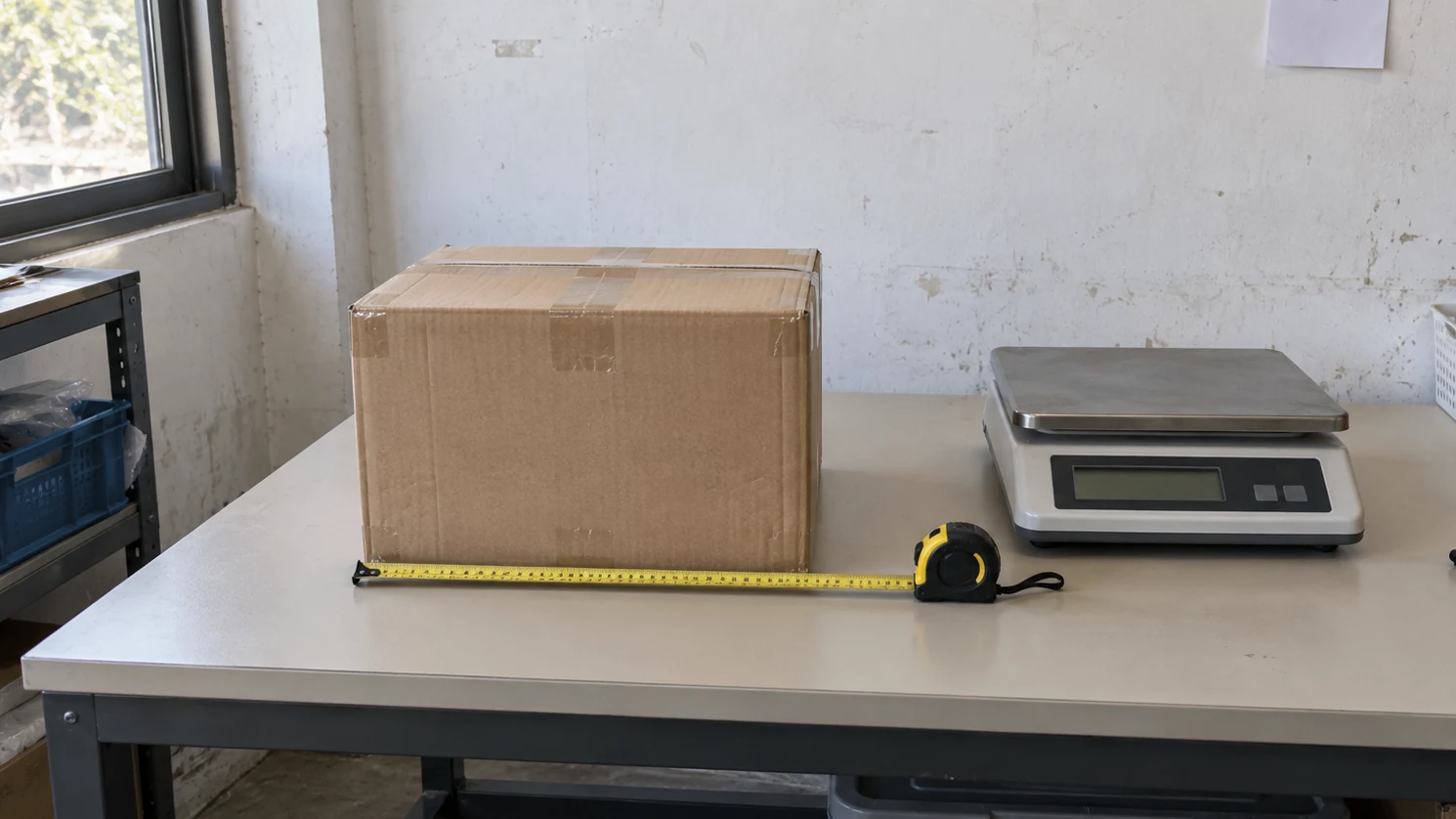
Freight is where estimates go wrong most often. Air and express are priced on chargeable weight, the higher of actual weight and volumetric weight. A light product in a big carton is billed for the carton. Get carton sizes and gross weight from the supplier before you trust any freight number.
Example: 500 silicone kitchen mats to Germany by air
Example only. The prices and fees are assumed for illustration, and the duty and VAT rates are the ones published when we wrote this. Your product, route and date will give different numbers.
Swipe sideways to see every column →
| Input | Value in this example |
|---|---|
| Quantity | 500 mats |
| Supplier price | $1.19 per mat |
| Cartons | 5 cartons, 50 x 40 x 35 cm, 14 kg each |
| Air freight rate | $4.20 per kg of chargeable weight (assumed) |
| Commodity code | 3924 10 00, plastic kitchenware (assumed for this example) |
| Duty rate (d) | 6.5%, EU TARIC third-country duty for 3924 10 00 at the time of writing |
| Import VAT rate (v) | 19%, the German standard rate at the time of writing |
Step 1 is chargeable weight. Volumetric weight per carton is 50 x 40 x 35 / 6,000 = 11.7 kg. The actual weight of 14 kg is higher, so each carton is billed at 14 kg and the whole shipment at 70 kg. Air cargo commonly uses a divisor of 6,000. Express couriers often use 5,000, which makes light cartons cost more.
Swipe sideways to see every column →
| Line | Arithmetic | Amount |
|---|---|---|
| Goods | 500 x $1.19 | $595.00 |
| China inland freight | assumed | $15.00 |
| Air freight | 70 kg x $4.20 | $294.00 |
| Insurance | assumed | $5.00 |
| Customs value | 595 + 15 + 294 + 5 | $909.00 |
| Import duty | d x customs value = 6.5% x 909 | $59.09 |
| Import VAT | v x (customs value + duty) = 19% x 968.09 | $183.94 |
| Broker and airport fees | assumed | $60.00 |
| Delivery to the buyer | assumed | $40.00 |
| Sourcing fee | 5% x 595 = 29.75, below the $49 minimum | $49.00 |
| Landed cost | 909 + 59.09 + 183.94 + 60 + 40 + 49 | $1,301.03 |
| Per unit | 1,301.03 / 500 | about $2.60 |
The example is simplified. Under EU rules only a share of air freight goes into the customs value, and that share varies by departure airport. Counting all of it makes the duty here a little high. German import VAT can also include transport costs to the first destination in Germany, which we left out.
If the buyer is VAT registered and can reclaim import VAT, the cost that stays with the business is $1,301.03 minus $183.94, which is $1,117.09 or about $2.23 per unit. Price against the higher figure until your accountant confirms you can reclaim it.
Look at what moved the result. Freight came to $294, about half the goods value. That happens often with light, low-value goods sent by air, and it is why the same order by sea can land cheaper per unit if you can wait.
If you import into the United States
The same order into the US needs different checks. Treat these as questions to answer for your own product before you pay the supplier.
- Customs value: the US normally uses the transaction value, the price paid for the goods. International freight and insurance shown separately on the invoice are usually excluded. That makes the duty base smaller than in the EU.
- HTS code and duty rate: find the 10-digit code for your product at hts.usitc.gov and read the general duty rate. The code a supplier writes on the invoice is only a starting point.
- Section 301: many goods of Chinese origin carry an extra Section 301 duty on top of the general rate. Check whether your HTS code is covered. The Section 301 China duties are listed in the Chapter 99 headings that begin 9903.88.
- Other added duties: further tariffs on Chinese goods have been added and changed several times since 2025. Check what applies on the date your goods enter, with your customs broker.
- Small parcels: duty-free treatment for low-value parcels was suspended in 2025, so small shipments are no longer a way around duty. The CBP fact sheet below explains the change.
- Entry fees: formal entries pay the merchandise processing fee, and goods arriving by sea also pay the harbor maintenance fee. Your broker adds both to the entry.
- Sales tax: there is no federal import VAT. State sales tax applies when you sell, so it usually stays outside landed cost.
Commercial shipments valued over $2,500 generally need a formal entry, and a formal entry needs a customs bond. If you import regularly, a licensed customs broker is worth having before your first shipment arrives.
Checking duty for the EU and the UK
In the EU, look up the 10-digit commodity code in TARIC. It shows the third-country duty and any anti-dumping duty on goods from China. Anti-dumping duty covers some ceramic tableware and steel goods from China, among other products. It can be far higher than the normal duty.
In the UK, use the UK Trade Tariff on GOV.UK. The UK has set its own rates since leaving the EU, so look the code up again there instead of reusing an EU figure.
Import VAT in both is charged on the customs value plus duty. The rate depends on the country and sometimes on the product.
Costs buyers forget
- Domestic freight from the factory to the port or warehouse. On 1688 listings it is often not in the price.
- Customs broker and port handling fees at your end. Small shipments pay minimum charges that make them expensive per unit.
- Extra tariffs on goods from China in some markets, on top of the standard duty.
- Currency conversion and bank or card fees.
- Labels, inserts or FBA prep if your sales channel requires them.
- Samples and their shipping. Keep them out of the unit cost but inside the product budget.
- Relabeling or repacking if goods arrive wrong.
- Storage at your end while the goods wait to sell.
How to bring landed cost down
- Get real carton data first and plan the shipment around it. Changing the number of units per carton can cut volumetric weight.
- Ship by sea when the timing allows. Keep air for samples and urgent restocks.
- Consolidate products from several suppliers into one shipment, so the minimum charges are paid once.
- Check the HS code before you order. A wrong code causes delays and can mean paying the wrong duty.
- Ask what the supplier's price includes. An EXW price and an FOB price for the same goods are different numbers.
Our sourcing fee is part of the calculation too. It starts at 5% of the goods value and steps down to 3% on larger orders, with a $49 minimum, and it appears as its own line on the quote. We add no markup to supplier prices.
Official sources
Free tool
Estimate landed cost per unit
Put in your own numbers for a quick per-unit estimate. The full calculator adds shipping routes and more duty detail.
Landed cost and margin calculator
Real freight, real duty, and your margin before you pay a 1688 supplier
Result
Fill the fields and press Estimate. Freight scenarios, duty, and VAT come from the same engine as our reports.
Landed cost and margin calculatorMore free tools for this
FAQ
Questions
What is included in landed cost?
Product cost, freight, insurance, duties, import taxes, broker fees and any service fees, everything paid until the goods are in your hands.
Is VAT part of landed cost?
If you cannot reclaim it, yes. VAT-registered businesses often reclaim import VAT, so they track it separately.
How do I calculate landed cost per unit?
Add every cost from the supplier price to delivery at your door, then divide by the number of units you can sell. Units that arrive damaged or fail inspection should not be in the divisor.
Is freight included in the customs value?
It depends on the country. The EU and the UK include freight and insurance to their border. The US usually leaves out international freight when it is shown separately on the invoice.
Can I get an exact landed cost before I order?
You can get a close estimate. Duty and tax depend on the final classification and customs value, and freight is confirmed once the goods are packed. Update the estimate as each line is confirmed.
Want us to handle this for you?
Tell us what you need. Quotes for 1–3 standard products usually take 24–48 hours.