

1688 MOQ pressure calculator for sample and test orders
A low 1688 unit price is not useful if the supplier MOQ locks too much cash into an unproven product. Use this page to frame MOQ as a decision before requesting a quote.
Start with the order you are considering
Enter the supplier MOQ and your intended test quantity. Your report stays blank until you choose Calculate, so an example is never mistaken for your order.
MOQ explained
What does MOQ mean?
MOQ (Minimum Order Quantity) is the smallest quantity a supplier accepts for one order. On 1688, it may apply to the total order or separately to each SKU, color, or size. The number does not prove that an order is viable: compare the cash tied up, assumed sell-through, excluded landed and selling costs, and supplier quote before paying.
Inputs
Supplier MOQ, test quantity, SKU count, supplier unit price, selling price, and monthly sales
Output
Cash tied up, excess versus the test quantity, units per SKU, and gross-receipts recovery
Boundary
Scenario math only; landed, selling, compliance, and supplier-verification costs remain separate
Quick answer
Use this page to decide the next sourcing step
Illustrative case
What a 500-unit MOQ can do to a 100-unit test
A complete example makes the model and its limits easier to audit before you use your own figures.
- Supplier MOQ
- 500 units
- Intended test
- 100 units · 3 SKUs
- Supplier price
- $2.60 / unit
- Sales assumption
- $14.99 · 120 units / month
$1,300 product cash at MOQ; $1,040 more than the test; about 4.2 months of stock; gross receipts cover the product cost in about 0.7 month.
Illustrative arithmetic only. Freight, prep, insurance, duty, tax, brokerage, delivery, platform, payment, ads, fulfillment, storage, and returns remain excluded. This is not a profit or demand forecast.
Platform context
1688 MOQ vs Alibaba MOQ: what the displayed number does not settle
Listing terms on either platform are a starting clue. Confirm the supplier quote and the exact product before payment.
Best fit
Best for sellers who need cashflow-safe sourcing decisions
Use the calculator for product-cash pressure, then check landed cost, selling costs, supplier evidence, and route risk separately before payment.
First test order
Avoid buying too many units before demand is proven.
Gross-spread check
Compare MOQ cash outlay with selling price before platform, payment, ads, fulfillment, and return costs.
Prep quantity
Label and repack fees can change at different quantities.
Variant split
MOQ may apply per color, size, or SKU instead of total order.
Domestic freight
China-side freight may change with carton quantity.
Source switch
Compare current source cost against the 1688 route only after MOQ and route assumptions are visible.
Workflow
MOQ check workflow
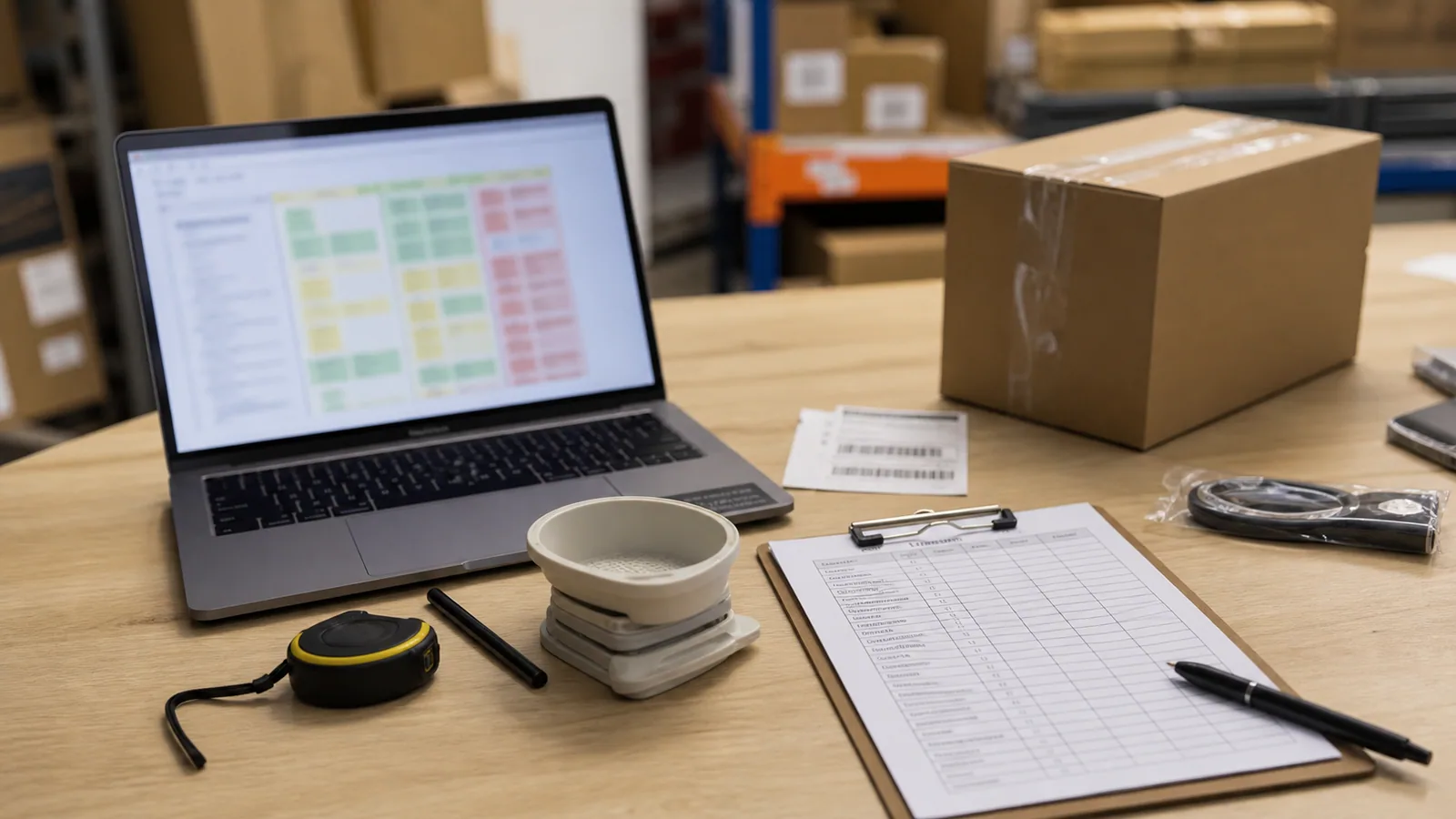
Decision before quantity
Treat the quantity result as one input; confirm the supplier quote and complete costs before payment.
Risk boundaries
MOQ risks to expose early
Service boundary
Use this page as a pre-payment decision aid
Supplymo does not guarantee the final order outcome.
This page helps expose missing fields, cost pressure, supplier risk, prep work, and route questions before supplier payment. It does not guarantee supplier quality, platform approval, customs clearance, final tax, final freight, delivery time, or sales performance.
Questions
Common decisions before requesting a quote
What does MOQ mean?
MOQ (Minimum Order Quantity) is the smallest number of units a supplier will accept for one order. On 1688 and with Chinese factories the MOQ may apply to the total order or per SKU, color, or size; whether it can change depends on the supplier and product terms. The practical question is whether that minimum is realistic for your cash, complete selling-side costs, and first test order.
Is 500 a high MOQ on 1688?
It can be high for an unproven first order, but there is no universal 1688 threshold. Product type, ready stock versus customization, SKU split, supplier terms, and your sales rate all matter. Use the optional listing sample only as an indicative median and middle range, then confirm the exact supplier quote.
Is MOQ negotiable on 1688?
Sometimes, but V1 does not promise negotiation by default. The first job is to decide whether the MOQ is worth quoting.
Can I calculate MOQ without a 1688 link?
Yes. The core calculation only needs your numeric scenario. A keyword or 1688 product link is optional and adds indicative listing observations, not supplier verification.
Does a lower MOQ always mean lower risk?
No. A low MOQ can still fail if prep, shipping, restrictions, or platform fit are poor.
When should I request assisted ordering?
Only after MOQ, cost, prep, and route risk are clear enough to prepare a written quote.
What fields change the MOQ decision most?
Supplier MOQ, target first-order quantity, SKU or color split, supplier product price, target selling price, and assumed monthly sales determine the calculator result. Landed and selling costs must be checked separately.
Why does SKU split matter?
MOQ may apply per color, size, model, or SKU instead of the total order. A 300-unit supplier MOQ can become much harder if it must be split across multiple variants.
Can the MOQ calculator guarantee sell-through or profit?
No. It shows cash pressure and gross spread before selling-side costs from your assumptions. It does not calculate actual profit or guarantee demand, ads, returns, platform approval, supplier quality, duty, tax, or shipping cost.
Can this compare AliExpress or CJ products against 1688 MOQ?
Not inside this calculator. Its optional lookup accepts a keyword or 1688 product link for indicative listing observations. Submit other marketplace links to Product Check when you need product-match and supplier evidence reviewed.
What should I submit after the MOQ screen?
Submit the product or supplier link, MOQ, target quantity, SKU count, destination, sales channel, package data, and prep needs for a written product check before supplier payment.
Related pages
Use the page that matches your next decision
The full written report has a standard price of $29. During the limited-time launch offer it is $0 (free), with no report payment or card required. See a sample report
Need a manual review before supplier payment?
Send the link, quantity, destination, SKU/options, carton data, and prep needs. Supplymo turns the tool result into a practical route decision before assisted ordering.
Reference definition
A listed MOQ is a starting field, not an accepted production order
MOQ means minimum order quantity, but the unit matters: one piece, one pack, one SKU, one colour or one carton can produce very different cash exposure. A listing value is not the same thing as a supplier-confirmed production MOQ. In a Supplymo snapshot of 120 non-deduplicated result/detail rows from 12 selected English searches on 1688, 102 returned a listed minimum order quantity of two units or fewer and 84 returned one displayed price tier; neither field confirms checkout acceptance, a negotiated production MOQ or a final supplier quote. Use the calculator for a buyer-entered scenario, then ask the supplier to repeat the exact SKU, pack unit, accepted quantity and price in writing before payment.
The calculator cannot confirm that a supplier will accept the quantity, preserve the displayed price, mix variants, hold stock or quote the same packaging terms.
Open the underlying MOQ and price-tier studyIn a Supplymo snapshot of 120 non-deduplicated result/detail rows from 12 selected English searches on 1688, 102 returned a listed minimum order quantity of two units or fewer and 84 returned one displayed price tier; neither field confirms checkout acceptance, a negotiated production MOQ or a final supplier quote.
Supplymo. "1688 MOQ Pressure Calculator for Sample and Test Orders." https://supplymo.com/1688-moq-calculator. Accessed 12 September 2026.