
Mini Projector
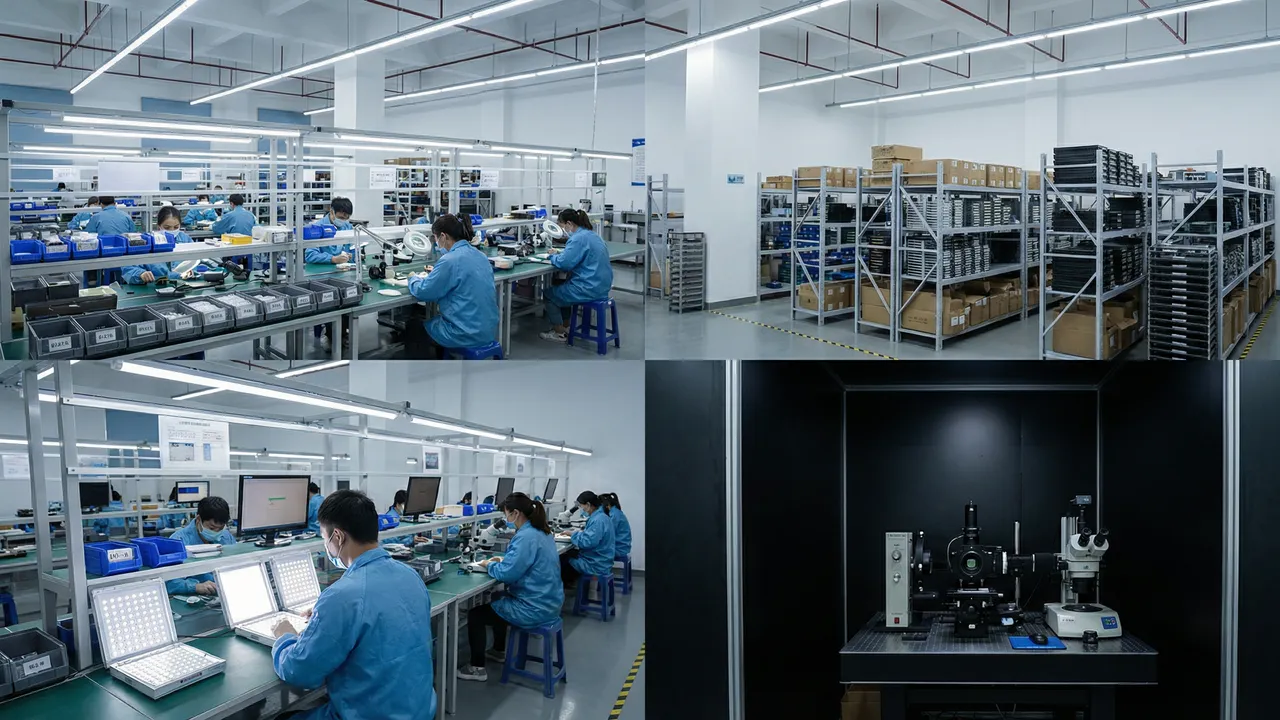
Walk through Shenzhen's Bao'an district — specifically the Fuyong and Shajing subdistricts — and you'll pass 80+ mini projector factories within a 15-kilometer radius, employing an estimated 12000 workers, each one assem...
Trend Score
96
+15% this week
Inside this report
- Category Overview
- Product Type Guide
- Trend Data
- Product Gallery
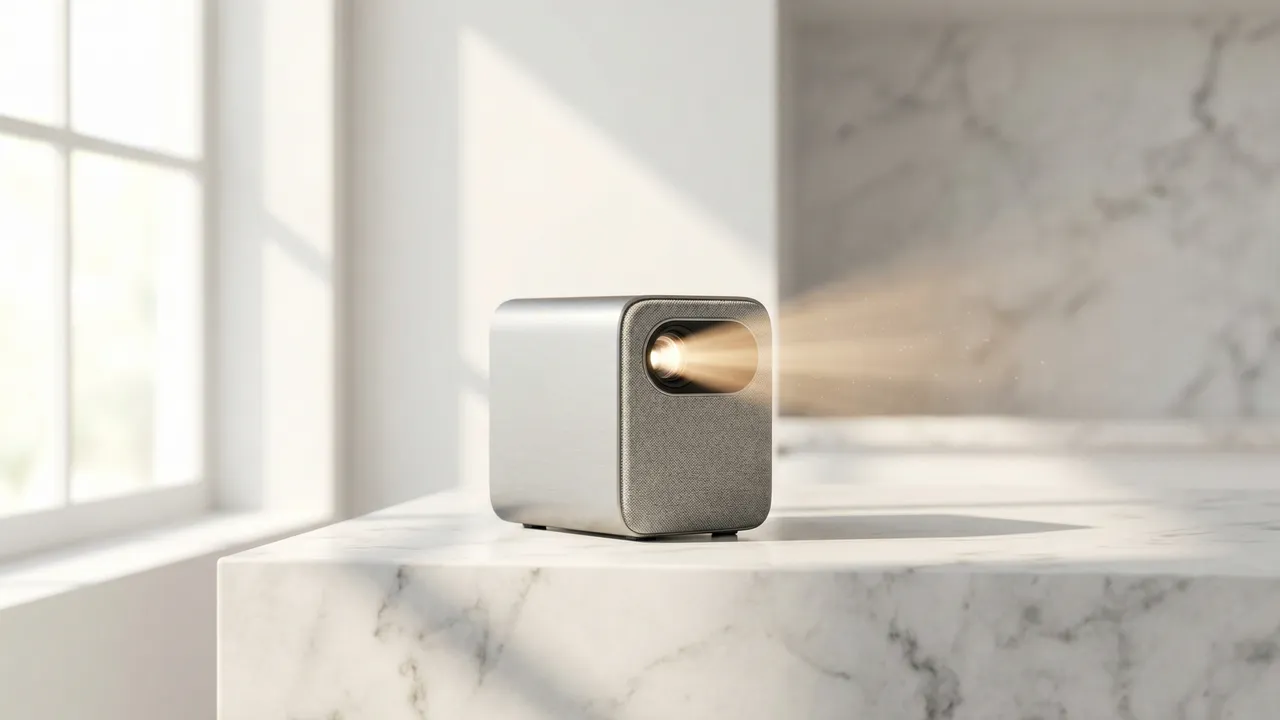
Category Overview
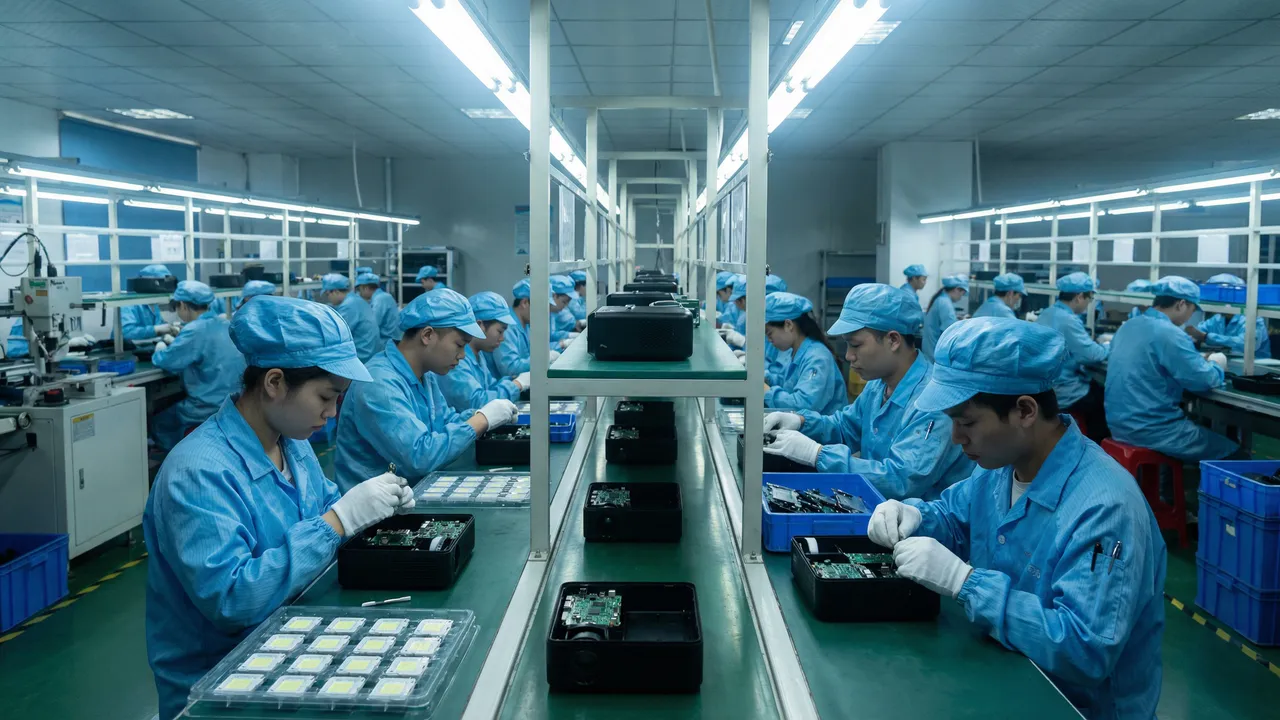
Walk through Shenzhen's Bao'an district — specifically the Fuyong and Shajing subdistricts — and you'll pass 80+ mini projector factories within a 15-kilometer radius, employing an estimated 12000 workers, each one assembling units that will ship to Amazon warehouses, hotel procurement departments, and classroom AV integrators across 140+ countries, shipping over 5 million units per year. This corridor alone accounts for roughly 35-40% of global consumer projector output, a concentration of manufacturing density that no other region on earth matches, with factories averaging 150-300 workers each and producing 2000-8000 units per day across for this product category.
The global mini projector market sits at approximately $4.2-5.1 billion in 2026 retail value, growing at a 12-15% CAGR driven by portable entertainment demand, with unit shipments exceeding 18 million units annually and the post-pandemic shift toward hybrid work. China produces an estimated 70-80% of all consumer-grade projectors worldwide, with Guangdong province dominating finished-unit assembly while Jiangsu and Zhejiang handle critical optical components. For sourcing buyers, understanding this supply chain geography is the difference between paying $38 FOB for a 480p LCD unit and paying $95 FOB for a genuinely capable 1080p smart projector — or getting scammed by relabeled specs in between.
Buyer demographics split into three distinct segments. Amazon FBA private-label sellers represent the largest volume channel, typically ordering 500-2000 units per SKU at the $40-95 mid-tier price point where 720p and 1080p LCD models dominate, with average order weights of 8-12 kg per carton of 20 units. B2B procurement — hotels, co-working spaces, corporate training rooms, and K-12 classroom deployments — gravitates toward the $80-160 mid-premium range where Android smart OS, reliable WiFi connectivity, and 3000+ hours LED lifespan rated at 150-280 watts peak power draw justify the per-unit premium. Dropshippers and crowdfunding campaigns round out the buyer pool, often targeting the $55-120 pico/pocket DLP segment where battery-powered portability creates strong differentiation on platforms, where campaigns regularly ship 3000-5000 units within 60 days of launch on platforms like Kickstarter and Indiegogo.
Seasonal demand follows a pronounced curve. Q4 (October through December) generates 35-40% of annual unit volume globally, driven by Black Friday, holiday gifting, and Chinese New Year preparation orders that factories must fulfill by late January. Smart buyers place production orders in July-August to lock in factory capacity before the Q4 rush inflates lead times from the standard 25-35 days to 45-60 days, and raw material lead times stretch an additional 7-14 days. The secondary peak lands in Q2, when outdoor and portable projector searches spike 20-30% as summer camping and backyard cinema trends drive consumer interest.
Display technology defines both price floors and competitive positioning. Single-LCD projection — using panels from BOE or Innolux priced at $8-14 per panel — commands 60-70% of the consumer market by unit volume. These panels offer adequate brightness for dark-room viewing at 150-400 true ANSI lumens (despite wildly inflated marketing claims), with the main limitation being contrast ratios typically capped at 2000:1. DLP technology, built around Texas Instruments' proprietary DMD chips, captures 25-30% market share and delivers noticeably sharper images with 3000:1+ contrast. The critical constraint: TI is the sole global supplier of DMD chips, creating a single-source dependency that every DLP projector buyer must account for. The DLP230NP (0.23-inch, 720p native) costs $18-22, the DLP3310 (0.33-inch, 1080p native) runs $22-30, and the DLP4710 (0.47-inch, 4K pixel-shifting) commands $35-50. LCoS technology occupies less than 5% of the market, concentrated in premium home cinema applications above $300 FOB.
The SoC (System-on-Chip) ecosystem creates the biggest hidden cost variable that most first-time projector buyers miss entirely. Budget models run Allwinner H6 chips at $3-5 per unit or the newer H616 at $4-6 — functional for basic HDMI-in playback but sluggish when running Android apps. Mid-tier smart projectors step up to Allwinner H713 at $6-9 or Rockchip RK3566 at $5-8, both capable of smooth 1080p Android TV operation with Netflix sideloading (though not official Netflix certification). The premium tier uses Rockchip RK3588 at $12-18 for 4K decoding capability or Amlogic T972 at $6-10, while factories targeting official Google TV or Netflix certification must budget for MediaTek MT9269 at $8-14 plus the $8-15 per-unit Netflix licensing fee — a cost that transforms a $90 BOM into a $115 BOM before the buyer even negotiates margins.
FOB pricing tiers map directly to these component choices. Budget 480p LCD units with Allwinner H6, basic LED arrays, and ABS plastic housings land at $15-38 FOB with MOQs of 500-1000 units. Mid-range 720p-to-1080p LCD models using H616 or H713 SoCs, Luminus or Osram LED modules at $3-8, and glass lens assemblies at $3-5 (versus $2-3 for acrylic) price at $40-95 FOB with MOQs of 200-500. Mid-premium 1080p units with Android OS, auto-keystone correction, and dual-band WiFi via Realtek RTL8821CS modules at $1-2 each hit $80-160 FOB at MOQs of 100-300. Premium DLP models built on TI 0.33-inch DMD chips reach $130-280 FOB with MOQs as low as 50-200 units, reflecting both the higher component cost and the smaller factory runs typical of DLP assembly lines. Pico and pocket DLP models with built-in batteries add $8-15 for lithium cells (requiring UN 38.3 certification at $3,000-5,000 per test cycle) and price at $55-120 FOB.
Four macro trends are reshaping the sourcing landscape heading into late 2026 and 2027. First, smart OS integration has shifted from a premium differentiator to a baseline expectation — over 65% of new models shipping from Shenzhen now include some form of Android-based operating system, with Google TV certification emerging as the next battleground. Second, portable battery-powered projectors designed for outdoor use have grown from a niche into a segment approaching 15-20% of unit sales, driven partly by the camping and vanlife cultural movements in North America and Europe. Third, ultra-short-throw (UST) laser technology, once limited to $800+ retail units, is beginning to trickle into the $200-350 retail range as ALPD (Advanced Laser Phosphor Display) costs decrease from Chinese suppliers like Appotronics in Shenzhen's Nanshan district. Fourth, AI-powered auto-calibration using Time-of-Flight sensors — specifically the STMicroelectronics VL53L series at $1.50-2.50 per unit — enables automatic focus, keystone correction, and obstacle avoidance, features that command a 15-25% retail price premium with minimal BOM impact.
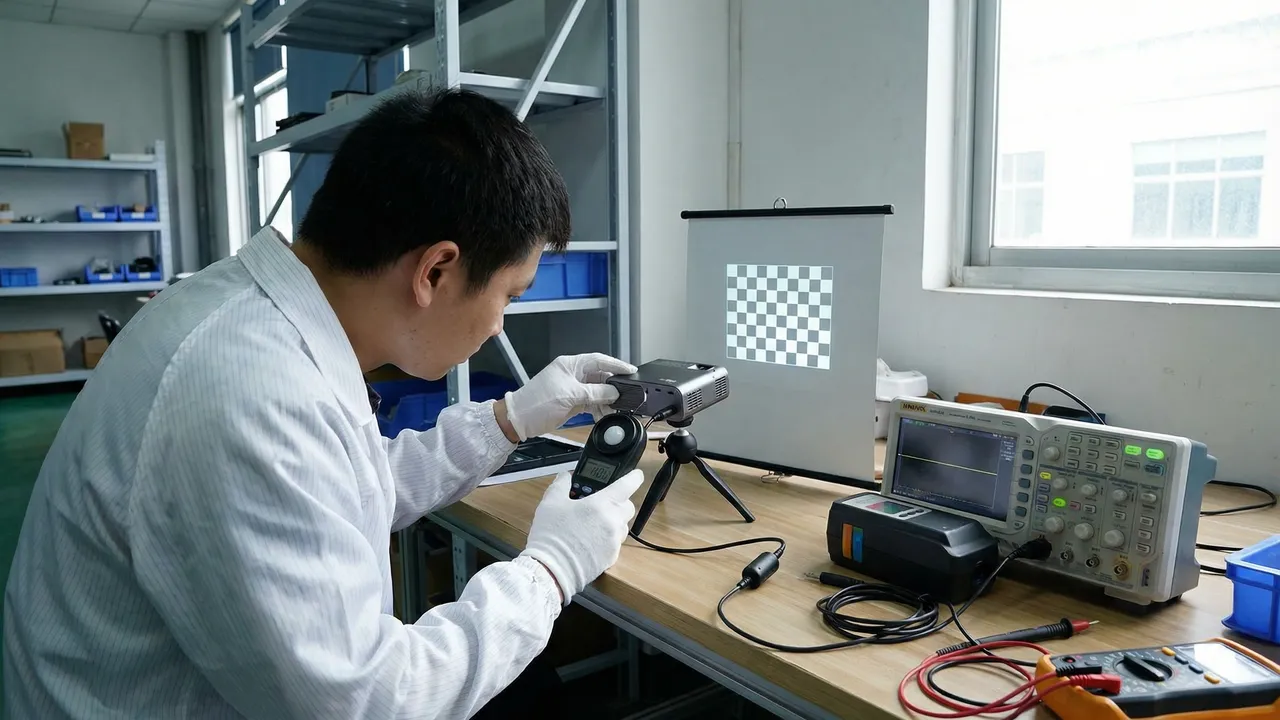
One pervasive industry problem demands specific attention: lumen fraud. An alarming number of 1688 and Alibaba listings advertise 5000, 8000, or even 12000 lumens for projectors that measure 150-400 ANSI lumens under standardized testing. The discrepancy arises because factories report LED source lumens (the raw output of the LED chip before optical losses) rather than ANSI lumens (the actual screen brightness measured at nine standardized points). Buyers who fail to specify ANSI lumen requirements in purchase contracts routinely receive units 10-20x dimmer than expected. The fix: require ANSI lumen measurement per ANSI/IEC 62087 in your purchase agreement and verify with a $200-400 lux meter during pre-shipment inspection.
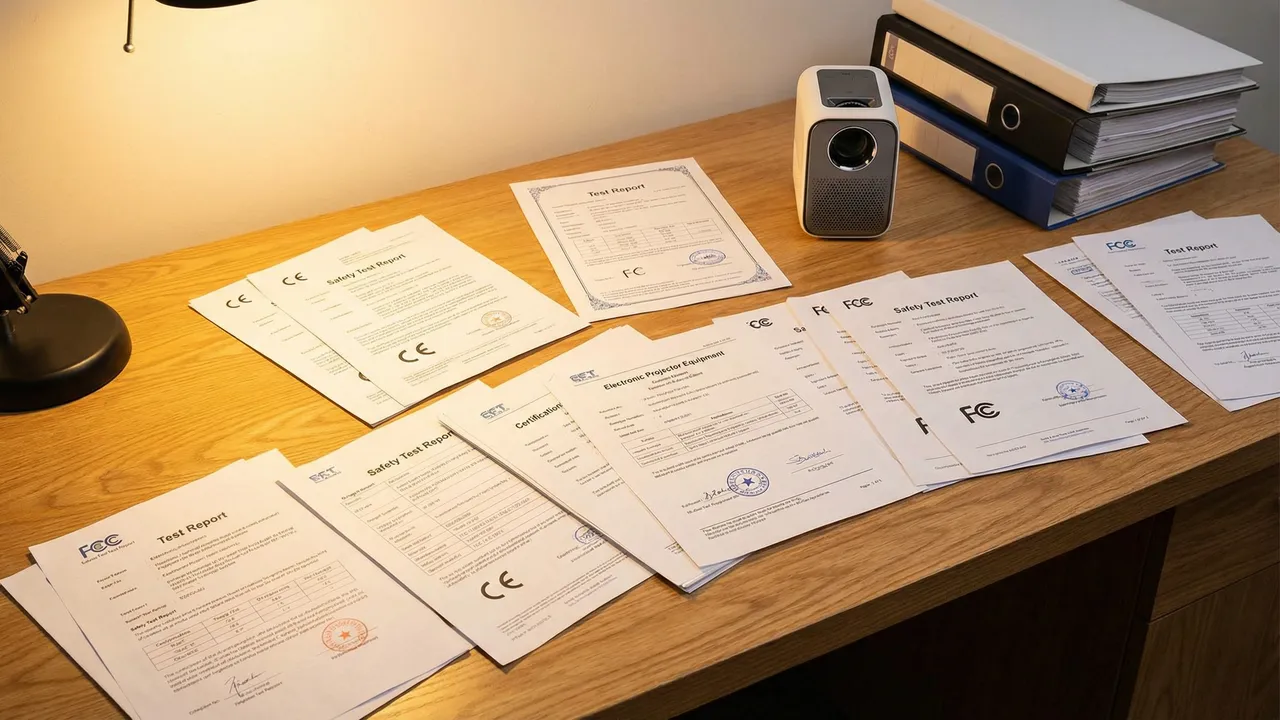
Certification costs form a non-trivial portion of the first-order budget. FCC Part 15 testing for US market access runs $3,000-6,000 per SKU. CE marking under EN 62368-1 for the EU costs $4,000-8,000. RoHS compliance documentation adds $1,500-3,000. IEC 62471 eye safety testing — increasingly required by marketplace platforms — costs $2,000-4,000. UL 62368-1 for US safety listing, while not legally mandatory, is increasingly demanded by retailers and runs $8,000-15,000. HDMI licensing through the HDMI Forum requires a $15,000 annual membership plus $0.15 per unit royalty — a cost that adds up fast at 5,000+ unit volumes. Budget $15,000-40,000 for a complete certification package covering US, EU, and UK markets on a single SKU.
Product Type Guide
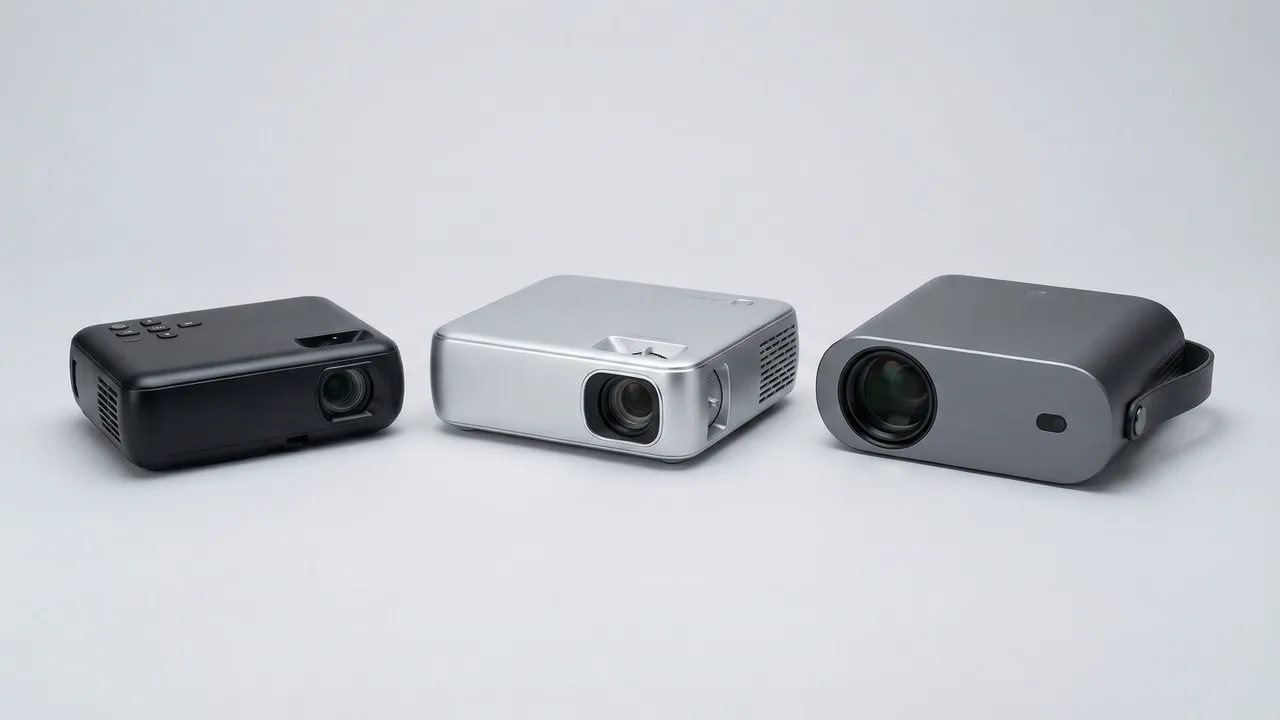
Budget LCD Projector (480p-720p)
Single LCD panel with LED backlight, basic HDMI/USB input, no smart OS. Uses Allwinner H6 or MStar 6A648 SoC. 150-200 ANSI lumens typical. Best entry point for high-volume wholesale and promotional markets where unit cost matters more than image quality.
Mid-Range Smart LCD (1080p + Android)
1080p native LCD panel (BOE 5.0-5.8 inch) with Android 10-12 smart OS on Allwinner H616 or Rockchip RK3566 SoC. 250-400 ANSI lumens. Built-in WiFi (Realtek RTL8821CS), Bluetooth 5.0, and app ecosystem. The highest-volume B2B segment representing 40-50% of China mini projector exports.
Premium DLP (1080p TI DMD)
Texas Instruments DLP3310 0.33-inch DMD chip producing 1080p native resolution with 3000:1+ contrast ratio. 300-500 ANSI lumens. Paired with Rockchip RK3566 or Amlogic T982 for smart OS. Glass aspherical lens standard. Significantly sharper image than LCD at equivalent lumens, commanding 2-3x retail premium.
Hotel & Corporate B2B (Custom-Branded Smart)
1080p LCD or entry DLP with custom firmware locked to hotel portal or corporate presentation mode. Kensington lock slot, VESA mount compatibility, remote management via LAN/cloud API. Custom boot animation and restricted app launcher. Volume contracts of 500-2000 units per hotel chain or corporate procurement cycle.
Trend Data
Product Gallery
BOM / Cost Breakdown
| Component | Material | Cost Share | Notes |
|---|---|---|---|
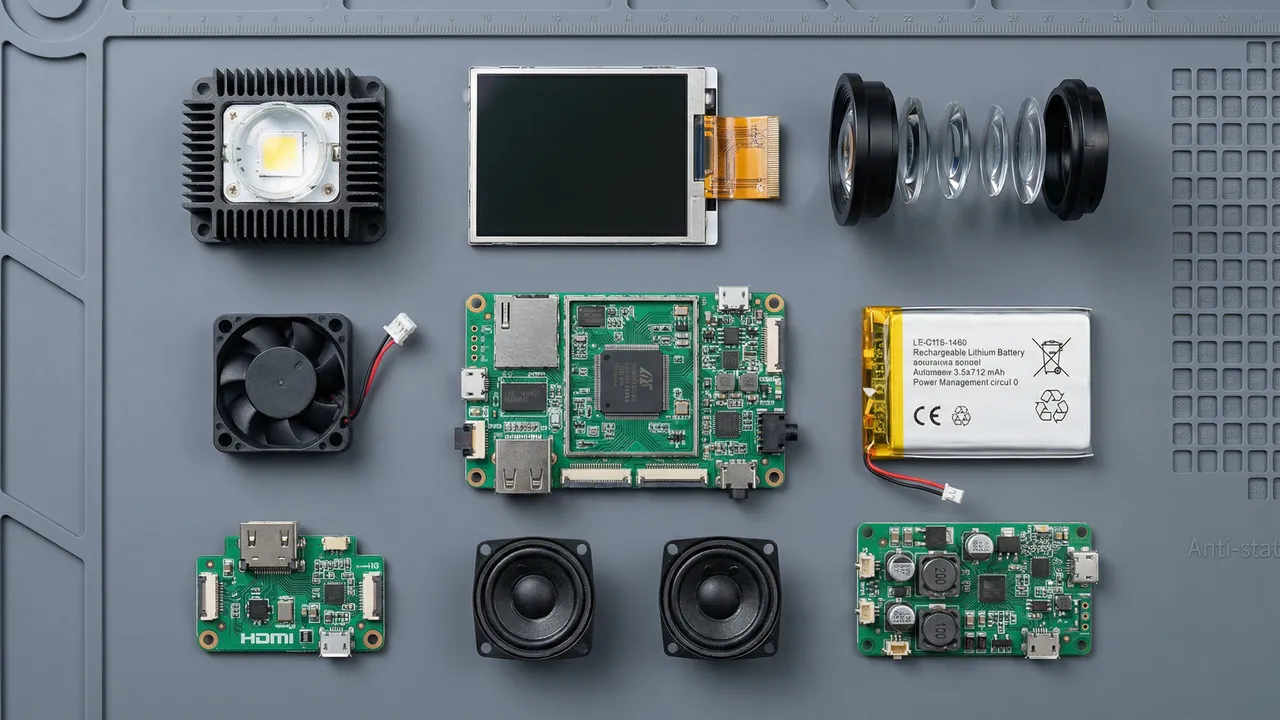
| LCD/DLP display panel | - | 22 | BOE or Innolux 5.0-5.8 inch 1080p TFT-LCD panel at $8-14 for LCD models; TI DLP3310 0.33-inch DMD chip at $22-30 for DLP models. This single component determines native resolution, contrast ratio, and image sharpness ceiling. |
| SoC + RAM + eMMC storage | - | 17 | Allwinner H616 at $4-6 for budget, Rockchip RK3566 at $5-8 for mid-tier, Amlogic T972 at $6-10 for premium Android TV. Add 1GB DDR4 at $1.50 or 2GB at $3, plus 16GB eMMC at $1.80 or 32GB at $2.50. |
| Housing and plastic enclosure | - | 15 | ABS injection-molded shell with UV-resistant coating runs $3-5 per unit. Custom mold tooling costs $5,000-15,000 amortized across 3,000-5,000 unit runs. Includes front bezel, rear panel, lens ring, and rubber feet. |
| Power supply and LED driver board | - | 13 | Integrated switching power supply (100-240V input) and constant-current LED driver PCB at $4-7 combined. Units with external AC adapters cost $1-2 less but add shipping weight. Driver board regulates LED current to maintain consistent lumen output. |
| LED light source | - | 10 | Luminus SBT-70 or Osram P9 LED modules at $3-8 depending on lumen class. Budget units use generic Chinese LEDs at $1.50-3. LED lifespan rated 20,000-30,000 hours determines long-term warranty exposure. |
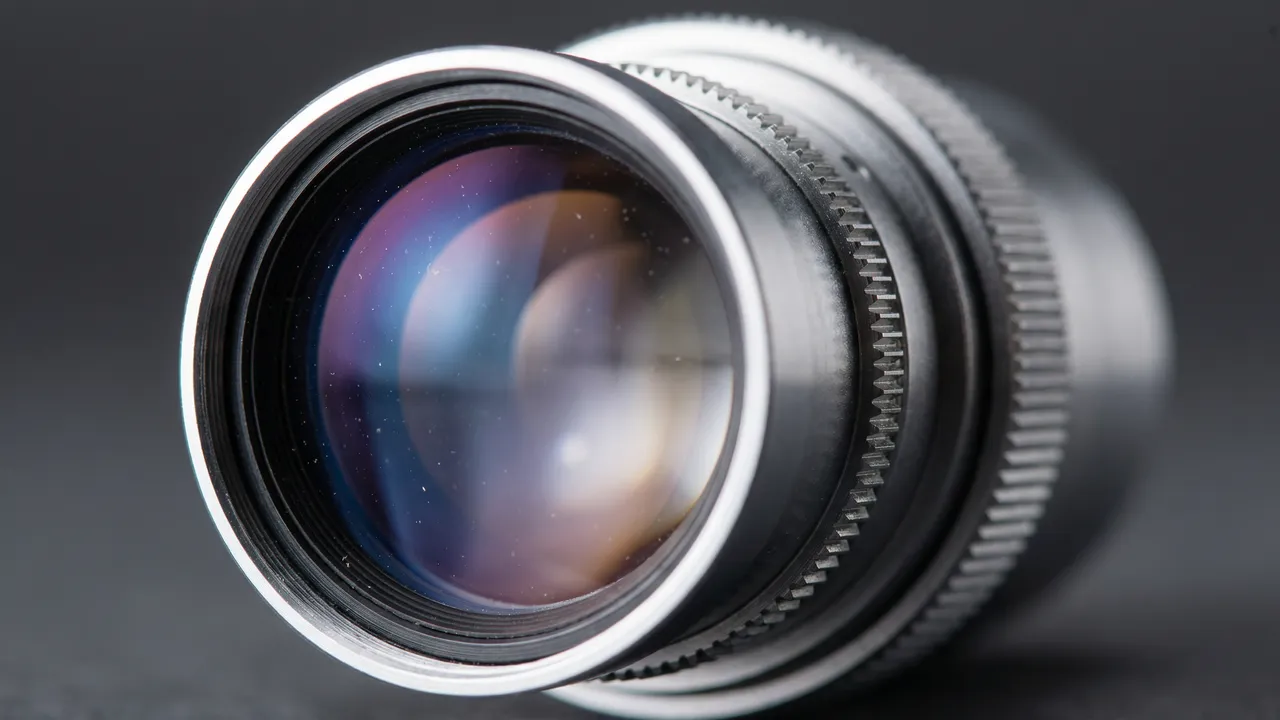
| Lens assembly | - | 7 | Glass aspherical lens groups from Dongguan Chang'an optical shops at $3-5 deliver sharp edge-to-edge focus. Acrylic lens alternatives at $1.50-2.50 reduce cost but degrade corner sharpness and yellow over time from heat exposure. |
| Cooling, speakers, WiFi, and packaging | - | 16 | Cooling fan + aluminum heatsink at $1-2, dual 3W-5W speakers at $1-2, Realtek RTL8821CS WiFi/BT module at $1-2, rigid-flex PCB assembly at $3-5, retail box with foam insert and accessories at $2-3. Combined ancillary components total $8-14. |
Key Component Specs
| Component | Tier | Model | Price (USD) | Notes |
|---|---|---|---|---|
| SoC (System-on-Chip) | Budget | Allwinner H6 | $3.5 | Quad-core Cortex-A53, Mali-T720 GPU, Android 9-10 support. Adequate for basic HDMI-input projectors without smart OS. No AV1 codec, sluggish app navigation. |
| SoC (System-on-Chip) | Mid | Allwinner H616 | $5 | Quad-core Cortex-A53, Mali-G31 GPU, Android 10-12. Standard choice for mid-range smart projectors. H.265/VP9 decoding, adequate for 1080p streaming. |
| SoC (System-on-Chip) | Mid-Premium | Allwinner H713 | $7.5 | Quad-core Cortex-A53 at higher clock, Mali-G31 MP2. Smoother Android 12 performance, dedicated video processing pipeline, lower thermal output than H616. |
| SoC (System-on-Chip) | Mid-Premium | Rockchip RK3566 | $6.5 | Quad-core Cortex-A55, Mali-G52 GPU. Broader codec support (AV1 partial), better Netflix sideloading compatibility, favored by ODM factories for mid-premium platforms. |
| SoC (System-on-Chip) | Premium | Rockchip RK3588 | $15 | Octa-core (4x Cortex-A76 + 4x A55), Mali-G610 MP4. 8K decode capable, 4K UI rendering, NPU for AI features. Current performance leader for premium/4K projectors. |
| SoC (System-on-Chip) | Premium (Google TV) | MediaTek MT9269 | $11 | Only viable SoC for official Google TV and Netflix certification (Widevine L1, HDCP 2.2). Adds $8-15/unit licensing. Required for 'Google TV Certified' branding. |
| SoC (System-on-Chip) | Budget (Standalone) | Amlogic T972 | $8 | Quad-core Cortex-A55, Android TV support. Strong video decoding pipeline, used in smart TV projectors. Less common in mini projector segment than Allwinner/Rockchip. |
| DLP DMD Chip | Mid (720p) | TI DLP3010 (0.3-inch) | $18 | 720p native resolution DMD. Entry-level DLP option for pico/pocket projectors. Single-source from Texas Instruments — no alternative suppliers exist. |
| DLP DMD Chip | Premium (1080p) | TI DLP3310 (0.33-inch) | $25 | 1080p native, most popular DMD for mid-premium mini projectors. $22-30 depending on volume. Combined with optical engine assembly adds $10-20 to BOM versus LCD. |
| DLP DMD Chip | Ultra-Premium (4K) | TI DLP4710 (0.47-inch) | $42 | 1080p native with XPR 4x pixel-shifting for 4K display output. $38-48 at volume. Requires precision optical engine alignment — only Tier-1 factories handle assembly. |
| LCD Display Panel | Budget | BOE 3.5-inch 480p TFT | $5 | Low-cost transmissive LCD for sub-$30 projectors. 800:1 contrast ratio, adequate for dark-room-only use. Innolux alternative at similar pricing. |
| LCD Display Panel | Mid | BOE 5.8-inch 1080p TFT | $12 | Standard panel for 1080p LCD projectors ($8-14 range). 1500:1 contrast. BOE Hefei plant and Innolux Nanjing are primary sources. |
| LED Light Source | Budget | Generic Chinese LED module | $3 | Unbranded LED with phosphor coating, 150-250 ANSI lumens output. Brightness degrades 20-30% within 2,000 hours. Common in sub-$40 projectors. |
| LED Light Source | Premium | Luminus CBT-90 or Osram P9 | $7 | Branded LED module maintaining brightness consistency over 10,000+ hours. 300-500 ANSI lumens. $5-8 at volume. Essential for units claiming 30,000-hour LED lifespan. |
| WiFi/BT Module | Standard | Realtek RTL8821CS | $1.5 | Dual-band 2.4/5GHz WiFi + Bluetooth 5.0 combo module. Industry standard for smart projectors. Requires discrete external antenna for reliable 8m+ range — PCB trace antenna saves $0.30 but drops signal 8-12 dBm. |
| Lens Assembly | Budget/Premium | 3-element acrylic / 5-element glass aspherical | $3.5 | Acrylic at $1.50-2.50 (budget), glass aspherical from Dongguan Chang'an at $3-5 (premium). Glass eliminates edge blur and chromatic aberration at 80+ inch projection. Recommended above $60 FOB tier. |
Supplier Comparison
| # | Supplier | Price | MOQ | Lead Time | Response Rate | Rating |
|---|---|---|---|---|---|---|
| 1 | Shenzhen XinShiCai Technology Co., Ltd Fast ShippingFactory DirectPlatform Verified | $155.00-167.40 | 1 | 10 days | 0.9 | 5/5 |
| 2 | Shenzhen BaiKeZhiChuang Technology Co., Ltd Factory DirectPlatform Verified | $185.00-199.80 | 1 | 15 days | 1 | 5/5 |
| 3 | Guangzhou YunGouPai Technology Co., Ltd Top SalesFactory Direct | $85.00-91.80 | 1 | 10 days | 0.9 | 5/5 |
| 4 | Shenzhen TianXingChuangZhan Electronics Co., Ltd Factory DirectPlatform Verified | $215.00-232.20 | 1 | 10 days | 0.9 | 5/5 |
| 5 | Shenzhen XinTianHao Technology Co., Ltd Best ValueFactory Direct | $65.00-70.20 | 1 | 10 days | 0.9 | 5/5 |
| 6 | Shenzhen ZhiYing Technology Co., Ltd Best RepurchaseFactory Direct | $188.00-203.04 | 1 | 19 days | 0.9 | 5/5 |
| 7 | Guangzhou ZhongHui Technology Co., Ltd Factory Direct | $88.00-95.04 | 1 | 10 days | 0.8 | 5/5 |
| 8 | Shenzhen TaoBoShuMa Technology Co., Ltd Factory Direct | $147.00-158.76 | 1 | 10 days | 0.8 | 5/5 |
| 9 | Chengdu DuoPuLeShiShuMa Technology Co., Ltd Factory Direct | $189.00-204.12 | 1 | 22 days | 0.8 | 5/5 |
| 10 | WanFoZhi Technology Co., Ltd Factory Direct | $189.00-204.12 | 1 | 23 days | 0.8 | 5/5 |
Common Sourcing Mistakes to Avoid
Skipping IEC 62471 eye safety certification for LED/laser projectors
Why it's a problem: Many first-time importers assume FCC and CE cover all safety requirements, but IEC 62471 is a separate photobiological safety standard that Amazon EU and Australian marketplaces now actively enforce. DLP projectors with concentrated LED or laser sources face higher Risk Group classification than LCD models, and units exceeding Risk Group 2 are banned from consumer sale without prominent warning labels.
What to do instead: Budget $2,000-4,000 and 4-6 weeks for IEC 62471 testing at an accredited lab. Request the factory's existing IEC 62471 test report for their platform design — Tier-1 factories in Fuyong and Shajing typically maintain current reports. Specify Risk Group 2 maximum in your purchase contract.
Accepting factory lumen claims without independent ANSI verification
Why it's a problem: Lumen fraud is endemic in the mini projector supply chain — factories routinely quote 'light source lumens' or 'peak lumens' that are 5-15x higher than actual ANSI lumen output. A projector marketed as '5000 lumens' typically delivers 150-400 ANSI lumens. Buyers who list inflated lumen claims on Amazon face suspension for misleading product information and high return rates from disappointed customers.
What to do instead: Require ANSI lumen measurement per IEC 62087 at nine grid points during sample evaluation. Bring or hire a calibrated lux meter (Sekonic C-800, ~$500). Set contract rejection threshold at any measurement below 80% of factory's stated ANSI specification. Never accept 'light source lumens' as the marketing specification.
Shipping battery-equipped pico projectors without UN 38.3 certification
Why it's a problem: Portable projectors with built-in lithium batteries (typically 30-80Wh) fall under international dangerous goods shipping regulations. Without valid UN 38.3 test certification, freight forwarders will refuse the shipment, airlines will reject it at cargo acceptance, and batteries exceeding 100Wh trigger Class 9 Dangerous Goods classification with 30-50% air freight surcharges.
What to do instead: Verify the battery cell supplier (not the projector assembler) holds valid UN 38.3 documentation before ordering. Budget $3,000-5,000 and 4-6 weeks per battery model for testing. For first orders, consider shipping projector bodies without batteries and sourcing batteries separately to avoid DG complications. Use sea freight instead of air to reduce both cost and regulatory burden.
Attempting to OEM or wholesale designs from major Chinese projector brands (XGIMI, Dangbei, Formovie)
Why it's a problem: First-time importers sometimes approach factories asking to replicate or white-label designs clearly belonging to XGIMI (极米), Dangbei (当贝), or Formovie/Fengmi (峰米). These brands hold active design patents in USPTO, EUIPO, and CNIPA covering distinctive housing shapes, lens ring profiles, and UI layouts. Copying these designs results in cease-and-desist orders, Amazon ASIN takedowns, and potential customs seizure.
What to do instead: Run a design patent search on Google Patents and USPTO PAIR using the factory's model number before ordering any ODM platform. Modify at least three distinguishing visual features — front grille pattern, LED indicator placement, and rear port layout. Work with Bao'an factories on their own original platform designs rather than requesting copies of branded products.
Accepting Allwinner H6 chipset when the specification sheet states H616 or H713
Why it's a problem: Chipset substitution is the most common BOM dispute in projector sourcing. Allwinner H6 ($3-5) is architecturally inferior to H616 ($4-6) and H713 ($6-9) — noticeably sluggish Android navigation, limited codec support (no AV1 decoding), and 30-40% slower app launch times. Factories save $1-6 per unit by substituting the cheaper chipset after sample approval, banking on the buyer not verifying during pre-shipment inspection.
What to do instead: Photograph the SoC chip markings on every approved sample using macro lens photography. Include the exact SoC model number in the purchase contract with a 15-20% per-unit rebate penalty clause for substitution. During inline QC inspection, open 5 random units and photograph the mainboard SoC markings — compare against the sample reference photo. Alternatively, check the SoC model via Android developer settings or ADB shell command 'getprop ro.board.platform' on powered-up units.
Sourcing Tools
Pre-filled calculators based on this product's data.
Calculate full cost including product, shipping, duties, and fees.
Estimate shipping cost by method, weight, and destination.
Generate a product-specific quality inspection checklist.
Look up tariff rates by HS code for US, EU, and UK.
Sourcing Essentials
Minimum Order Qty
300
Avg. Unit Price
148.6
Price Range
$65.00-$232.20
Est. Weight
0.55
HS Code
8504.40
Certifications
No certification data available yet.
Common Defects
No defect data available yet.
Customization Options
No customization data available yet.
Sourcing Notes
Shenzhen's Bao'an district concentrates the densest cluster of mini projector manufacturers in the world. Within Bao'an, three subdistricts matter most: Fuyong (福永) hosts vertically integrated factories like Everycom and Byintek that handle PCB assembly, optical alignment requiring 2-3 hours per batch, and final packaging under one roof; Shajing (沙井) specializes in mid-volume ODM operations running 2,000-10,000 unit batches for Amazon private-label brands; and Songgang (松岗) houses component subcontractors supplying LED modules, injection-molded ABS housings, and lens assemblies to the larger Fuyong plants. Crossing the district boundary into Longhua (龙华), the Dalang and Guanlan subdistricts serve as the component feeder zone — PCB fabrication shops, SMT lines, and WiFi module assemblers cluster here, typically quoting 15-20% lower labor costs than Bao'an proper due to slightly lower industrial rents.
Dongguan fills the gap for plastics, optics, and PCB fabrication that Shenzhen factories outsource. Chang'an (长安) town handles precision lens grinding and coating — the glass aspherical lenses that differentiate $60+ projectors from budget acrylic-lens units originate from a handful of Chang'an optical shops charging $3-5 per lens assembly versus $1.50-2.50 for acrylic equivalents. Humen (虎门) and Tangxia (塘厦) supply injection-molded housings, thermal management parts (aluminum heatsinks, copper heat pipes), and rigid-flex PCBs. For buyers sourcing complete units, this means your Shenzhen assembler likely pulls 30-40% of BOM value from Dongguan subcontractors within a 60-kilometer radius.
Beyond the Pearl River Delta, two inland brands have built substantial vertical operations. XGIMI operates from Chengdu (成都), Sichuan province, with in-house optical engine design and DLP assembly lines producing 500,000+ units annually — they represent the premium end where FOB prices start at $180. Formovie (previously Fengmi) runs production from Hangzhou (杭州), Zhejiang province, focusing on UST laser projectors using ALPD light engines sourced from Appotronics in Shenzhen Nanshan.
MOQ structures vary sharply by technology tier. Budget 480p LCD projectors carry MOQs of 500-1000 units because the assembly lines are optimized for high-throughput runs using standardized BOE 5-inch LCD panels and Allwinner H6 SoCs — setting up a production run below 500 units wastes changeover time that factories won't absorb at $15-38 FOB margins. Mid-range 1080p LCD models drop to MOQs of 200-500 units as the higher per-unit margin ($40-95 FOB) compensates for shorter runs. DLP projectors using TI DMD chips typically accept MOQs of 50-200 units because the $130-280 FOB price point delivers sufficient margin per unit, and DLP optical engine assembly requires more manual calibration steps that naturally slow line speed anyway.
The OEM versus ODM decision determines your control over the bill of materials. Pure OEM means you provide complete industrial design files — housing CAD, PCB Gerber files, optical layout, firmware image — and the factory executes assembly. This path suits buyers with in-house engineering teams and typically saves 8-12% on per-unit cost but requires $20,000-50,000 in upfront NRE (non-recurring engineering) for tooling, especially the $8,000-15,000 injection mold for a custom housing. ODM is the dominant model for first-time projector importers: you select from the factory's existing platform designs (most Shenzhen factories maintain 5-15 active SKU platforms), customize the exterior color, logo placement, boot animation, and packaging, then place an order. ODM customization typically adds $0.50-2.00 per unit for logo silk-screening and $500-1,500 for boot animation programming.
Chipset specification is the single most consequential technical decision in your purchase order, and failing to lock it in writing causes more disputes than any other factor. Factories routinely substitute chipsets between sample approval and mass production — you approve a sample running Rockchip RK3566 ($5-8), then receive mass production units with Allwinner H616 ($4-6) because the factory pocketed the $1-3 per-unit savings. The performance gap is tangible: RK3566 delivers smoother 1080p Android navigation, supports more video codecs natively, and handles Netflix sideloading without frame drops that plague H616-based units. Specify the exact SoC model, RAM capacity (1GB vs 2GB, roughly $1.50 difference), and eMMC storage size (8GB vs 16GB vs 32GB, $0.80-2.50 spread) in your purchase contract with penalty clauses for substitution. Request a photo of the opened mainboard during production showing the SoC markings as part of your inline QC protocol.
Negotiation leverage centers on three factors. First, payment terms: factories expect 30% T/T deposit with 70% before shipment for new buyers; after 2-3 successful orders, push for 30/70 with the balance payable 15-30 days after B/L date. Second, annual volume commitment: signing a framework agreement for 3,000-5,000 units across 3-4 shipments over 12 months typically unlocks 5-8% unit price reduction versus spot ordering. Third, certification cost sharing: if you're bringing FCC and CE certification ($7,000-14,000 combined) to a factory's existing platform that they can then offer to other buyers, negotiate a 40-60% certification cost rebate credited against your second order.
Quality tiers follow a predictable pattern that correlates with factory age and export experience. Tier-1 factories (Wanbo, AUN, Thundeal, Vivibright) maintain ISO 9001 certification, operate burn-in testing (typically 48 hours continuous operation) lines running 100% of units for 4+ hours, and carry product liability insurance — expect FOB premiums of 10-15% versus Tier-2 factories. Tier-2 operations handle the bulk of ODM volume: functional QC systems, adequate but not exceptional production environments, typically 2-5 years of export history. Tier-3 factories, often 1-2 year old operations in Songgang or eastern Dongguan, offer the lowest FOB prices but present the highest risk of component substitution, inconsistent optical alignment, and poor thermal management design. For first-time buyers, Tier-2 factories in Fuyong or Shajing represent the optimal risk-reward balance.
Procurement Steps
Market Research & Keyword Validation
Analyze Amazon Best Sellers rankings and Google Trends data for mini projector subcategories to identify which price tier and feature combination has the strongest demand-to-competition ratio. Cross-reference 1688.com search volumes for '迷你投影仪' against Alibaba RFQ data to validate supplier availability at your target FOB range. Map the top 50 competitor ASINs on Amazon US and extract recurring negative review themes — lumen brightness shortfall, fan noise above 40 dB(A), 2.4GHz-only WiFi dropout, sluggish Android UI performance, and poor edge focus — then construct your product specification sheet to systematically address these pain points. Verify Section 301 tariff applicability under HS code 8528.62.0000 at the current 25% rate and calculate preliminary landed cost before committing to a wholesale price tier.
Sample Sourcing & Evaluation
Request 3-5 samples simultaneously from shortlisted Bao'an district factories at $50-200 per unit depending on technology tier — budget 480p LCD samples run $50-80, mid-range 1080p LCD models cost $80-120, and DLP units with Android smart OS command $150-200. Specify the exact SoC chipset (Allwinner H713 or Rockchip RK3566), RAM size (2GB LPDDR4), and eMMC storage capacity (16GB) in every sample request to prevent factories from shipping a higher-spec demo unit that diverges from production intent. Execute all six verification tests: ANSI lumen measurement per IEC 62087 at nine grid points, Delta E color accuracy with a colorimeter targeting average ≤8.0, 4-hour thermal endurance at 28°C ambient, 80-inch focus uniformity corner check, fan noise measurement at 1 meter distance, and 8-meter WiFi range stability through one drywall partition. Physically open each sample to photograph the mainboard SoC markings and confirm the WiFi module model matches the Realtek RTL8821CS with a discrete external antenna.
Factory Audit & Qualification
Conduct on-site visits to your top 2-3 candidate factories in Shenzhen Bao'an, prioritizing operations in Fuyong and Shajing subdistricts where the densest concentration of projector manufacturers operates. Verify ISO 9001 certification validity with the issuing body, confirm that the factory runs a dedicated burn-in testing line subjecting 100% of finished units to a minimum 4-hour continuous operation at full brightness, and check product liability insurance coverage of at least $1 million. Inspect the optical alignment station — factories using laser-guided alignment jigs produce consistently sharper images compared to manual focus calibration setups. Trace BOM sourcing by requesting purchase invoices for LCD panels (BOE plant in Hefei or Innolux in Nanjing), SoC chips (authorized Allwinner or Rockchip distributor versus gray-market chip brokers), and LED modules (Luminus or Osram distributor receipts). Request the factory's historical OEM client list and verify at least two references through direct outreach.
Order Placement & Contract
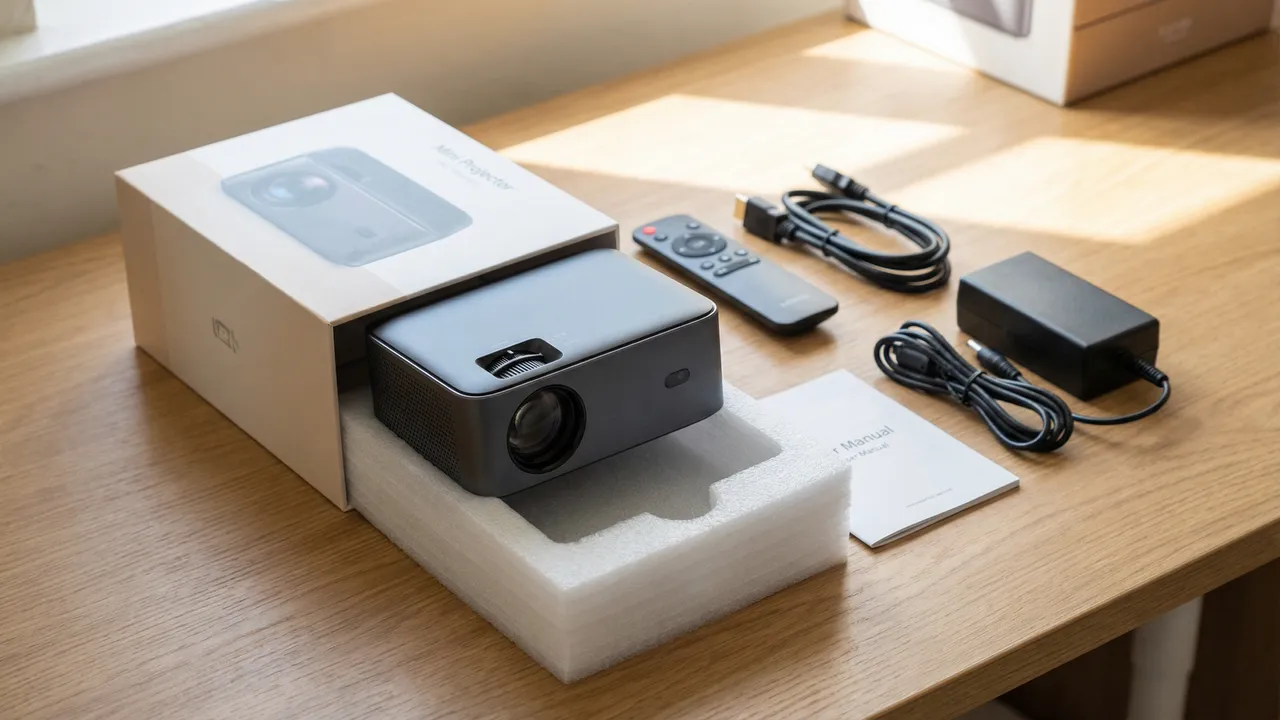
Draft a bilingual (English and Chinese) purchase contract specifying every BOM component by manufacturer and model number — lock in the SoC (e.g., 'Rockchip RK3566, 2GB LPDDR4, 16GB eMMC'), display panel (e.g., 'BOE 5.8-inch 1080p TFT'), LED module brand and model, WiFi chipset (Realtek RTL8821CS), and lens material (glass aspherical from Dongguan Chang'an, not acrylic). Include penalty clauses for component substitution: a 15-20% per-unit rebate if mass production units contain different chipsets than the approved sample, verified through inline QC mainboard photography. Set payment terms at 30% T/T deposit with 70% payable against copy of Bill of Lading — resist factory pressure to collect the balance before shipment on first orders. Specify FCC Part 15 and CE EN 62368-1 certification responsibilities (factory bears testing cost if using their existing platform), delivery timeline of 25-35 days for OEM runs of 200-500 units, and packaging requirements including retail box dimensions and accessory bundle contents (HDMI cable, remote, power adapter, user manual).
Production QC & Inspection
Schedule three inspection touchpoints during the 25-35 day production cycle. First, an inline inspection at 30% completion to verify correct PCB component placement, match SoC chip markings against the contract specification photograph, and assess solder joint quality on the LED driver board using a 10x loupe. Second, a mid-production check at 60% completion where you pull 20-30 randomly selected units for ANSI lumen output verification, focus uniformity across an 80-inch projection, and continuous thermal performance under a 2-hour test. Third, a formal pre-shipment inspection (PSI) per AQL 2.5 General Inspection Level II — for a 500-unit order, this means pulling a sample of 50 units for cosmetic defect assessment, functionally testing 32 units for optical and electronic performance, and opening 5 units to photograph internal components confirming BOM compliance. Hire a Shenzhen-based third-party inspection firm such as SGS, Bureau Veritas, or Asia Inspection at $250-350 per man-day rather than accepting factory self-inspection certificates.
Shipping & Logistics
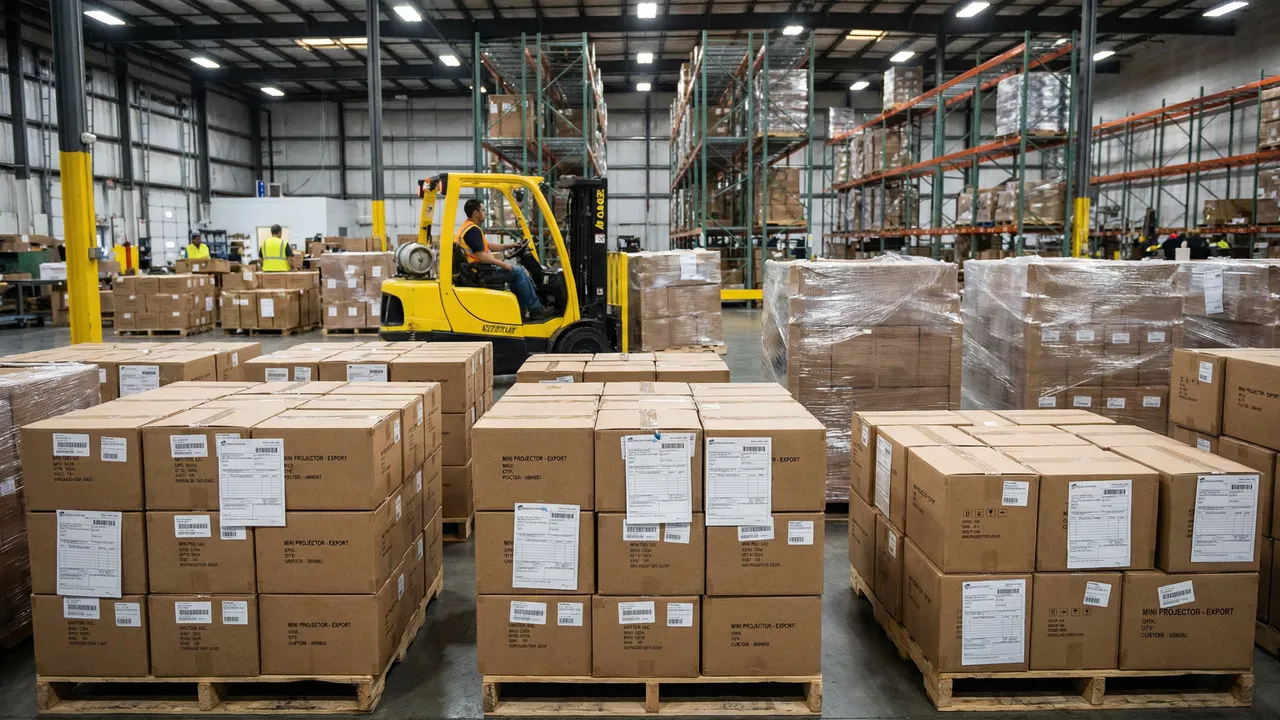
Select freight mode based on order volume and launch timeline: sea FCL (a 20ft container holds 2,000-3,000 standard-size projector cartons) delivers to USA West Coast in 25-30 days at $1.50-3.00 per unit; sea LCL for orders under 500 units takes 30-45 days at $3-8 per unit; air freight for urgent product launches reaches any major destination in 5-10 days at $6-15 per unit; and China-Europe rail freight provides a middle option at 15-18 days and $3-6 per unit through the Chongqing-Duisburg corridor. For battery-equipped pico projector models, complete UN 38.3 testing and certification before booking any freight — lithium batteries exceeding 100Wh are classified as Class 9 Dangerous Goods under IATA DGR, restricting them to cargo-only aircraft with air freight surcharges of 30-50%. Book freight forwarding 2 weeks before the factory's estimated production completion date to avoid Shenzhen port warehouse storage charges of $0.50-1.00 per CBM per day.
Customs Clearance & Delivery
File the Importer Security Filing (ISF/10+2) 72 hours before vessel departure for US-bound shipments, declaring HS code 8528.62.0000 and preparing for the combined 28.9% duty burden (25% Section 301 tariff plus 3.9% MFN duty) on declared FOB value. For EU-bound shipments, declare under CN code 8528.62.00 at the 14% MFN tariff rate and verify that WEEE (Waste Electrical and Electronic Equipment) registration is active in each EU member state where you plan to sell. Prepare FCC Declaration of Conformity and CE Declaration of Conformity documents before the vessel arrives — US Customs and Border Protection and EU customs authorities may request these at the port, and missing documentation triggers holds of 5-15 business days plus $75-150 daily demurrage charges. Calculate total landed cost summing FOB price, ocean freight, customs duties, customs broker fees ($150-300 per entry), drayage to warehouse ($200-500), and Amazon FBA prep service fees ($0.50-1.50 per unit) before finalizing your retail price and confirming margin viability.
Shipping Estimates
| Method | Destination | Cost | Transit Days | Notes |
|---|---|---|---|---|
| Sea freight (FCL, 20ft container) | USA West Coast (Los Angeles) | 2.5 | 28 | - |
| Sea freight (LCL) | USA East Coast (New York) | 5.5 | 40 | - |
| Air freight | USA (Los Angeles LAX) | 9 | 8 | - |
| Express courier (DHL/FedEx) | USA (door-to-door) | 18 | 5 | - |
| Sea freight (FCL, 20ft container) | EU (Hamburg, Germany) | 3 | 35 | - |
| Sea freight (LCL) | EU (Rotterdam, Netherlands) | 6 | 42 | - |
| Rail freight (China-Europe) | EU (Duisburg, Germany) | 4.5 | 18 | - |
| Air freight | EU (Frankfurt, Germany) | 12 | 7 | - |
Risk Alerts
Require ANSI/IEC 62087 lumen measurement report from an accredited lab before placing production orders. Verify in-house with a calibrated lux meter (Sekonic C-800) at nine grid points on a 100-inch screen in a darkened room. Reject any unit where measured ANSI lumens fall below 80% of the factory's stated specification — a 300-lumen claim measuring below 240 lumens fails.
Lock the exact SoC model (e.g., Rockchip RK3566), RAM capacity (2GB LPDDR4), and eMMC size (16GB) in the purchase contract with a 15-20% per-unit rebate penalty for substitution. Require inline QC photos of the opened mainboard showing SoC markings at 30% production completion. Check boot logs via ADB during pre-shipment inspection to confirm the running chipset matches contractual specifications.
Projectors emitting concentrated light must comply with IEC 62471 photobiological safety standards — Risk Group 2 or lower for consumer products. Testing costs $2,000-4,000 per SKU at labs like TUV or Intertek. Amazon and EU marketplace platforms increasingly enforce this requirement and will delist products lacking valid test reports. Budget 4-6 weeks for testing and report issuance.
HS code 8528.62.0000 carries a 25% Section 301 tariff plus 3.9% MFN duty for a total 28.9% duty burden on declared FOB value entering the USA. Factor this into landed cost calculations before setting retail price. Monitor USTR exclusion lists quarterly — projector categories have not received exclusions as of March 2026. Consider bonded warehouse strategies or tariff engineering through substantial transformation in Vietnam or Malaysia if volumes exceed 10,000 units annually.
Run a 4-hour continuous burn-in test at maximum brightness in 28°C ambient conditions — exhaust temperature exceeding 65°C at 5cm from the vent indicates inadequate heatsink or fan design. For battery-equipped pico models, require UN 38.3 test certification ($3,000-5,000) and verify the battery cell supplier uses UL-listed cells. Insist on PTC (positive temperature coefficient) protection circuits and a physical thermal fuse on the battery pack.
XGIMI, Dangbei, and Formovie hold active design patents in the US (USPTO), EU (EUIPO), and China (CNIPA) covering distinctive housing shapes, lens ring profiles, and UI layouts. Before ordering any ODM platform design, run a design patent search on Google Patents and the USPTO PAIR database using the factory's model number. Modify at least three distinguishing visual features — front grille pattern, LED indicator placement, and rear port layout — to reduce infringement risk.
HDMI licensing requires a $15,000 annual membership fee plus $0.15 per-unit royalty through the HDMI Forum — unlicensed use risks cease-and-desist orders and marketplace delisting. Official Netflix certification via MediaTek MT9269 adds $8-15 per unit in licensing fees. Sideloaded Netflix on Allwinner or Rockchip SoCs technically violates Netflix terms of service and may stop functioning after firmware updates. Disclose streaming capability limitations accurately in product listings to avoid returns.
Sample Policy
Sample pricing for mini projectors ranges from $50 for budget 480p LCD units to $200 for premium DLP models with Android smart OS — most mid-range 1080p LCD samples land at $80-120, which includes basic retail packaging and a universal power adapter. Factories in Bao'an's Fuyong and Shajing clusters typically ship samples within 7-10 business days for existing platform models; custom-housing ODM samples requiring mold modifications extend to 14-21 days. Sample fees are refundable against production orders at roughly 85% of factories when the first bulk order meets the agreed MOQ — get this refund commitment in writing before wiring payment, specifying the exact order quantity threshold (usually 200-500 units) that triggers the credit. Every sample must pass six numbered verification tests before you approve mass production. Test 1 — ANSI Lumen Measurement: use a calibrated lux meter (Sekonic C-800 or equivalent) to measure screen brightness at nine grid points per ANSI/IEC 62087 at 100-inch diagonal in a fully darkened room. Pass threshold: measured ANSI lumens must reach at least 80% of the factory's stated specification. A unit claimed at 300 ANSI lumens that measures below 240 fails. Test 2 — Color Accuracy (Delta E): display a 24-patch ColorChecker target and measure with a colorimeter (X-Rite i1Display or Datacolor Spyder). Pass threshold: average Delta E ≤ 8.0 for consumer-grade units, ≤ 5.0 for units marketed as 'home cinema.' Values above 10.0 indicate substandard color wheel or LED phosphor quality. Test 3 — Thermal Shutdown Endurance: run the projector continuously at maximum brightness for 4 hours in a 28°C ambient environment. Pass threshold: the unit must not trigger thermal shutdown, and the exhaust temperature measured 5cm from the vent must not exceed 65°C. Units shutting down before the 4-hour mark have inadequate heatsink design or fan airflow. Test 4 — Focus Uniformity at 80 Inches: project a white grid pattern at 80-inch diagonal and visually inspect corner-to-center sharpness. Pass threshold: all four corners must resolve individual grid lines without visible blur or chromatic fringing wider than 2 pixels. Single-LCD units commonly fail this test due to cheap plastic lens elements that distort at projection edges. Test 5 — Fan Noise Level: measure operational noise at 1 meter distance from the projector using a calibrated sound level meter in a room with ambient noise below 30 dB(A). Pass threshold: ≤ 35 dB(A) for units marketed as 'quiet/bedroom' use, ≤ 42 dB(A) for standard consumer models. Units exceeding 45 dB(A) will generate customer complaints and negative reviews consistently. Test 6 — WiFi Range and Stability: connect the projector to a 5GHz WiFi network and stream 1080p video while moving the router to 8 meters distance with one drywall partition between. Pass threshold: zero buffering interruptions over a 10-minute test period, with signal strength remaining above -65 dBm. Realtek RTL8821CS modules with proper antenna placement pass reliably; units with cost-reduced PCB trace antennas frequently drop below -75 dBm and stutter. Red flags that warrant immediate factory rejection during sample evaluation: the factory refuses to provide an opened-unit photo showing the mainboard and SoC chip markings; the sample arrives with a different SoC than specified in the quotation (check the boot log via ADB or physically open the unit); measured ANSI lumens fall below 50% of the claimed specification; the power adapter carries no safety certification markings (CCC for China, UL/ETL for US); or the factory cannot produce a valid FCC/CE test report matching the exact model number of your sample. Any single one of these conditions signals either intentional deception or quality control gaps severe enough to guarantee mass-production problems at scale.
Frequently Asked Questions
DLP projectors use Texas Instruments' proprietary DMD (Digital Micromirror Device) chips — millions of microscopic mirrors flipping 5,000+ times per second — to produce images with 3000:1+ contrast ratios and razor-sharp pixel edges. LCD projectors pass light through a single transmissive LCD panel (typically BOE or Innolux, $8-14 per panel) resulting in softer images with 1500:1-2000:1 contrast but at 40-60% lower FOB cost. The practical tradeoff: DLP delivers visibly better image quality in rooms with ambient light, while LCD wins on price — a 1080p LCD projector costs $40-95 FOB versus $130-280 FOB for a comparable 1080p DLP unit using the TI DLP3310 chip at $22-30.
Related Resources
Methodology
How this report is assembled.
- Real-time 1688 supplier and offer data collected via API.
- Scoring blends search relevance signals with detailed supplier metrics.
- Data is refreshed regularly; outliers are flagged before surfaced.
Why trust this report
- Source-specific supplier data (not scraped listings).
- Structured QC and logistics considerations embedded in the analysis.
- Designed for sourcing decisions, not just content discovery.
About This Report
Supplymo Research Team
B2B Sourcing Intelligence
8+ years in cross-border sourcing
This report combines real-time 1688 supplier data, proprietary scoring algorithms, and cross-border trade expertise. All supplier scores, pricing, and lead times are verified through live API queries, not estimated or scraped. Updated regularly to reflect current market conditions.
- Supplier scores computed from 11 real-time metrics via 1688 Open API
- Price ranges derived from live search across 4+ query variants per category
- Two-stage supplier ranking: search scoring (40%) + detail API deep evaluation (60%)
Data sourced from 1688.com verified supplier APIs
Request a Sourcing Quote
Share your details and our team will reach out with pricing and next steps.
Trend Score
96
Discussion & Questions
No comments yet. Be the first to share your thoughts!