Bluetooth Headphones
Walk into any factory along Bao'an Boulevard in Shenzhen's Shajing-Fuyong corridor (沙井-福永) and you will hear the high-pitched whine of ultrasonic welding machines sealing TWS earbuds at 800-1,200 units per production lin...
Trend Score
100
+17% this week
Inside this report
- Category Overview
- Product Type Guide
- Trend Data
- Product Gallery
Category Overview
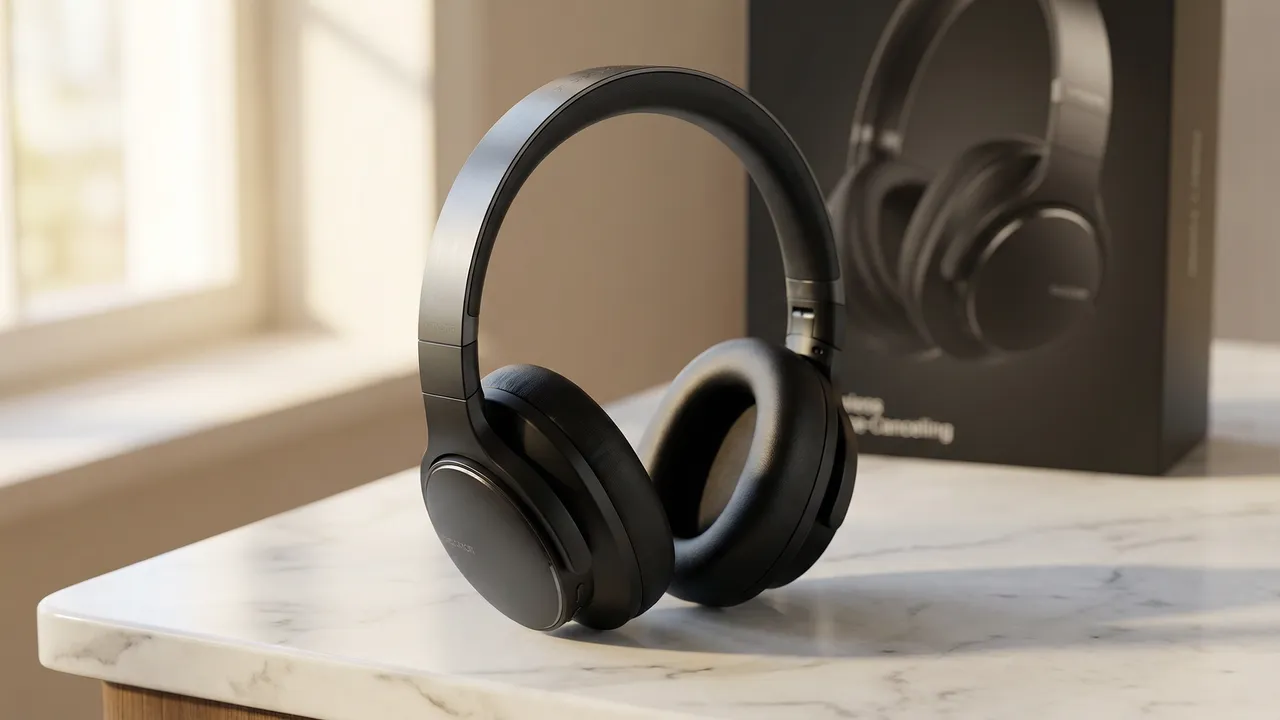
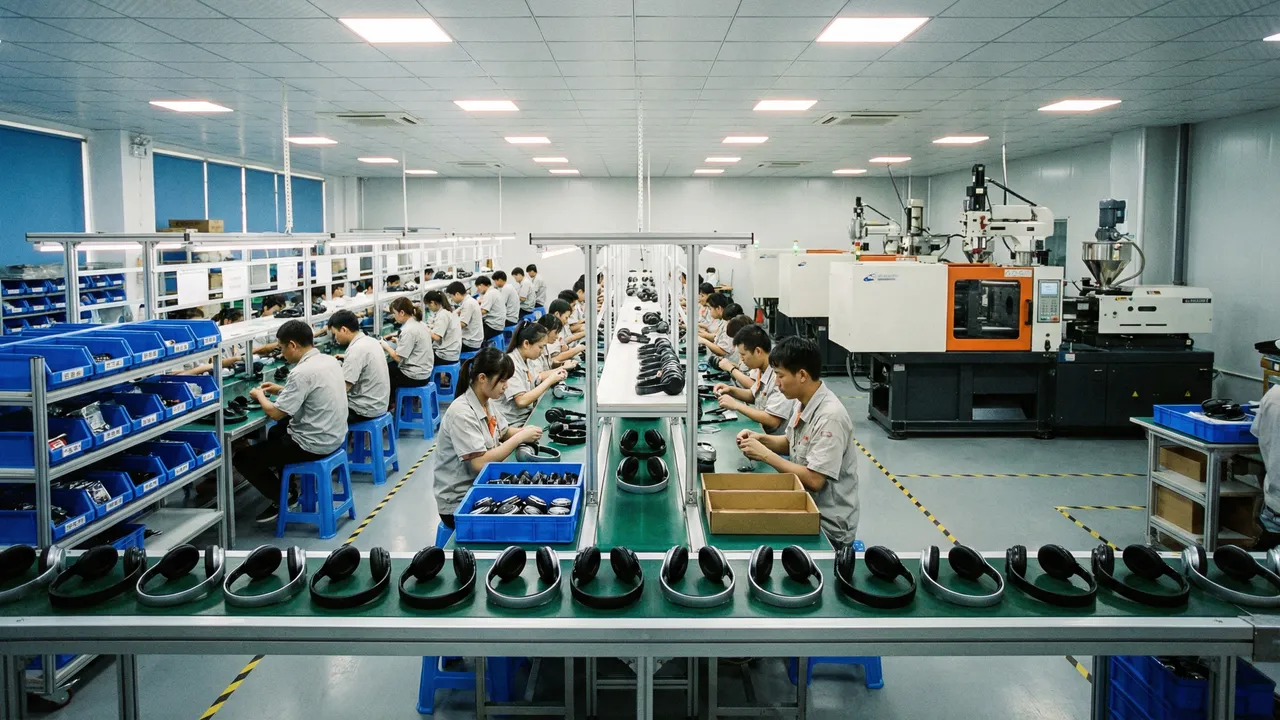
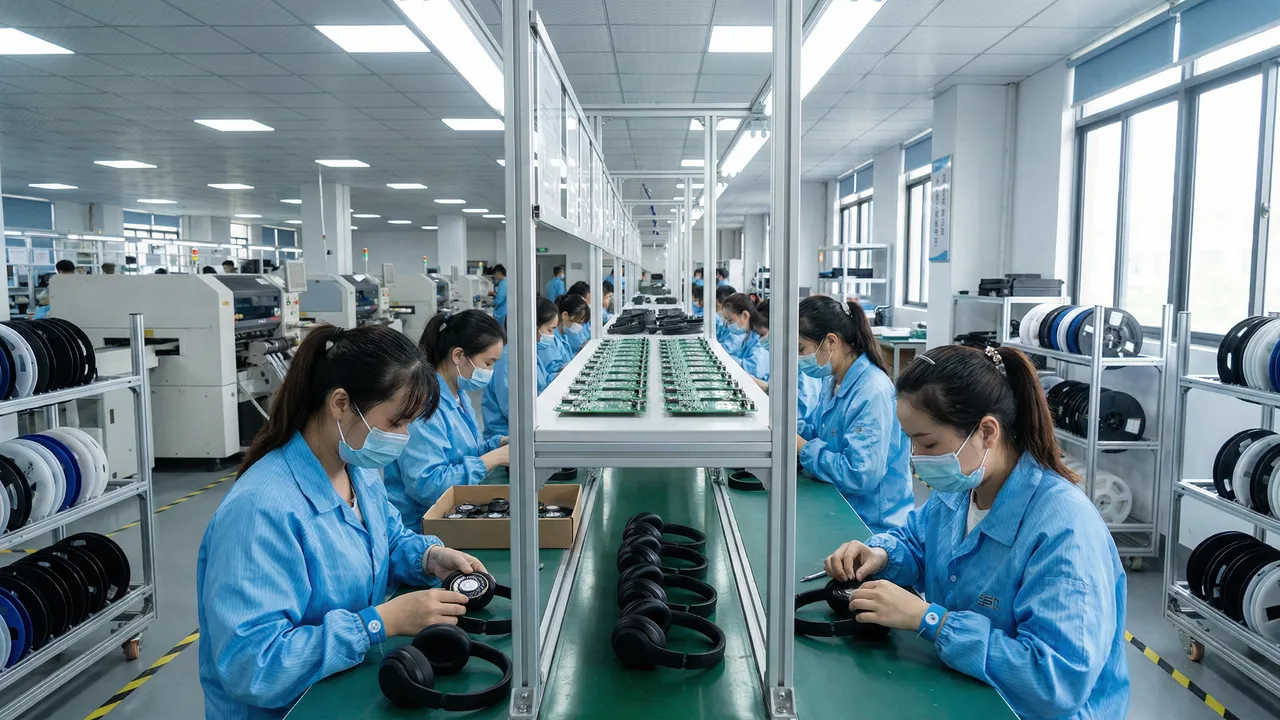
Walk into any factory along Bao'an Boulevard in Shenzhen's Shajing-Fuyong corridor (沙井-福永) and you will hear the high-pitched whine of ultrasonic welding machines sealing TWS earbuds at 800-1,200 units per production line per day. This 12-kilometer stretch in Bao'an district houses over 500 TWS assembly plants — the single highest concentration of wireless audio manufacturing on Earth. The Pearl River Delta triangle of Shenzhen, Dongguan, and Huizhou handles 85-90% of global wireless headphone production, from chipset integration through final retail packaging.
The global wireless audio market reached approximately $95-105 billion in 2024 and continues expanding at an 8-11% CAGR. TWS earbuds command 62-70% of unit volume, over-ear headphones hold 18-22%, and bone conduction models claim a growing 3-5% slice. For B2B buyers, the critical insight is that China's factory-gate pricing operates across three distinct chipset tiers that directly determine FOB cost, audio performance, and certification complexity.
Budget tier relies on JieLi (杰理) chipsets manufactured in Zhuhai. The JL6925A costs $0.35-0.55 per unit at 10K volume, while the JL6983 runs $0.50-0.80. These silicon choices yield TWS FOB prices of $1.10-$4.00 and over-ear FOB of $2.00-$6.50. Budget-tier products dominate the gift, promotional, and airline amenity segments where per-unit cost matters more than audio fidelity. Return rates without pre-shipment QC run 8-15%, dropping to 4-7% with inline inspection at AQL 2.5.
Mid-tier production centers on Airoha (headquartered in Taiwan, with IC design offices in Shenzhen's Nanshan district) and BES (恒玄, headquartered in Shanghai's Zhangjiang Hi-Tech Park). Airoha's AB1562A at $1.20-1.80 delivers hybrid ANC with dual feedforward+feedback microphones. The AB1568 ($1.50-2.20) adds multipoint connectivity for simultaneous device pairing. BES2600 at $1.80-2.50 supports BT 5.3 with LE Audio codec. Mid-tier TWS earbuds land at $3.50-$11 FOB and over-ear models at $6-$20 FOB — the sweet spot for Amazon private-label sellers targeting the $25-60 retail bracket, where gross margins typically reach 35-50% after FBA fees.
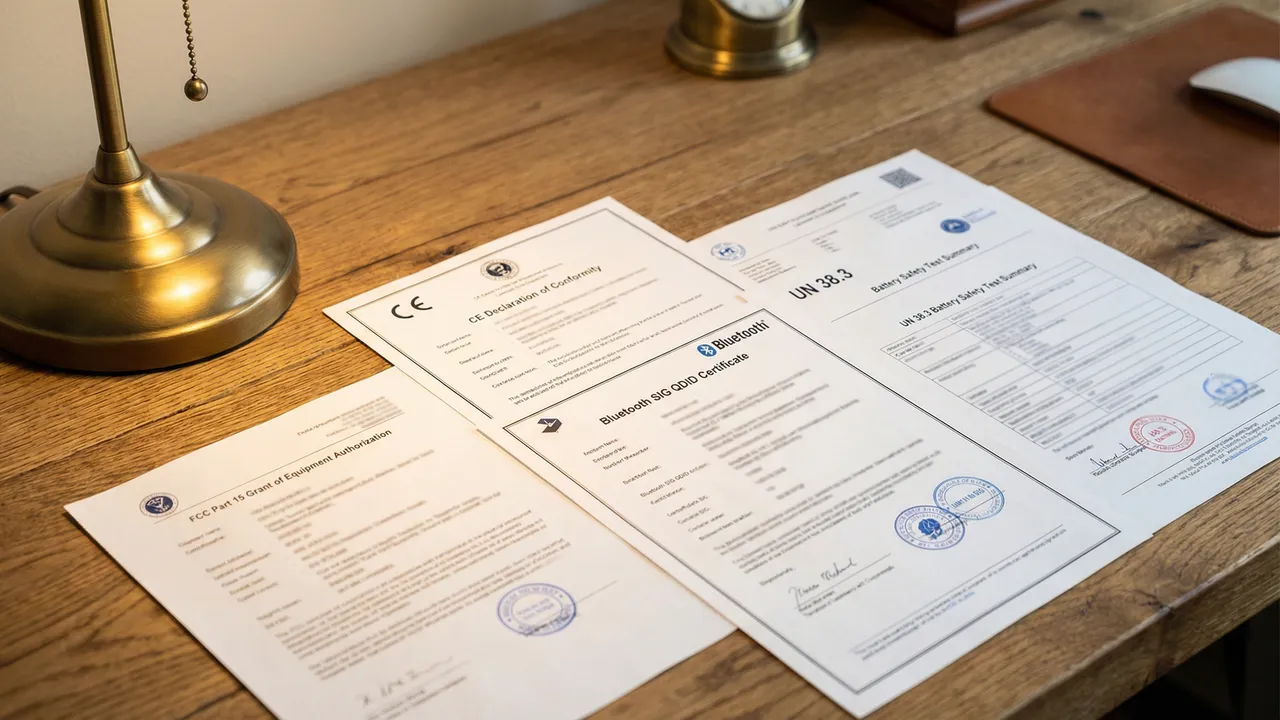
Premium tier belongs to Qualcomm. The QCC3071 at $2.50-3.50 supports aptX Adaptive, and the QCC5181 at $4-6 enables aptX Lossless with Snapdragon Sound certification. TWS FOB ranges from $8-$25; over-ear models reach $15-$45. Premium products require Bluetooth SIG QDID certification ($8K-40K) plus end-product listing ($4K-8K even with a pre-qualified module), creating a natural barrier that most budget competitors cannot clear.
Buyer demographics have shifted measurably since 2023. Amazon FBA sellers account for roughly 40-45% of sample requests on 1688, followed by brand distributors (20-25%), corporate gift buyers (10-15%), and emerging DTC brands (10-15%). The remaining 10-15% flows to niche verticals: airline amenity kits at $0.50-1.50 per unit with 50K+ MOQ, hotel welcome packages, gym fleet rentals, and language-learning integrators. These B2B verticals receive almost zero coverage in existing sourcing guides yet represent stable recurring volume with 30-60 day reorder cycles.
Seasonal purchasing patterns create distinct negotiation windows. Post-Chinese New Year from March through April is when factories restart with 20-40% excess capacity, enabling 5-15% price leverage on repeat orders. Production ramps in May-June to meet Amazon Prime Day inventory deadlines in July. The peak ordering cycle for Black Friday and Cyber Monday begins in August-September, when lead times extend from the standard 25-35 days to 40-55 days and prices firm up by 3-8%.
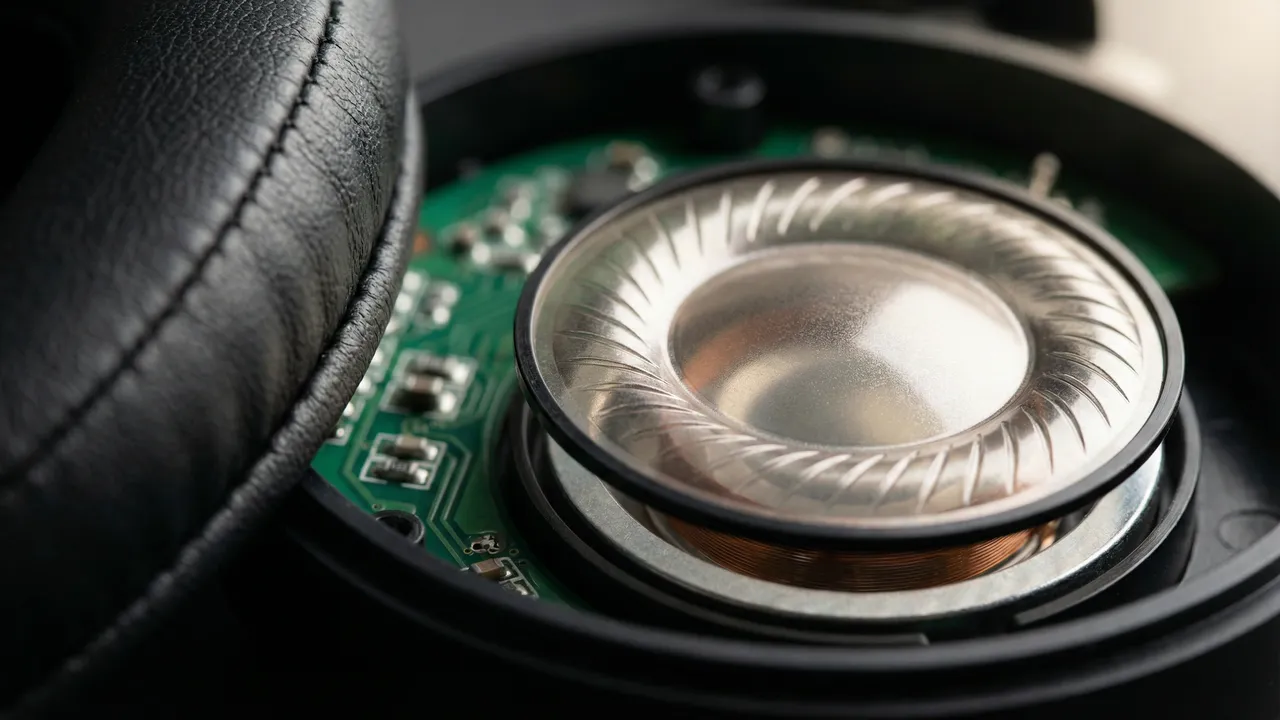
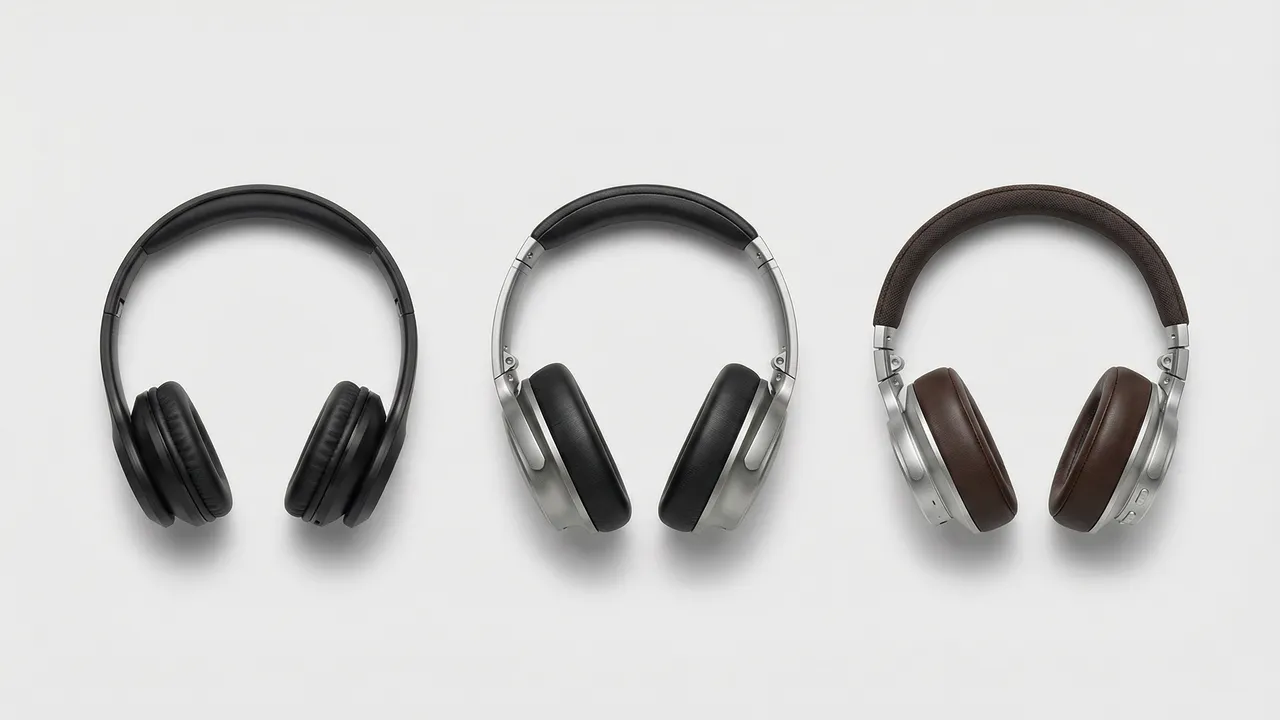
Material selection at the component level directly impacts both cost and perceived quality. Drivers range from 40mm PET diaphragms at $0.30-0.60 per pair (adequate for speech-focused use) to titanium-coated PET at $0.60-1.20 (improved treble clarity), up to bio-cellulose at $1.50-3.00 (warm, natural profile favored by audiophile brands). LCP (liquid crystal polymer) diaphragms at $2.50-5.00 deliver the flattest frequency response and appear in flagship OEM builds. Housing moves from standard ABS plastic at $0.80-1.50 per set to aluminum alloy at $3.00-8.00, adding heft and thermal conductivity for extended gaming sessions. Ear cushions show a similar gradient: PU leather with standard foam at $0.30-0.60 per pair handles budget tier, protein leather over memory foam at $0.80-1.50 distinguishes mid-range through comfort during 4+ hour wear, and genuine leather at $2.00-4.00 per pair signals premium positioning.
A structural trend reshaping the supply chain is the open-ear clip-on subcategory. Pioneered by factories in Dongguan's Tangxia district (塘厦), this form factor delivers $4-8 FOB with $30-50 retail potential — one of the highest margin ratios in consumer audio. Clip-on production grew an estimated 180-250% year-over-year in late 2025, driven by fitness users and commuters who need ambient awareness without sacrificing music playback.
Pricing differences between platforms remain substantial. Identical SKUs listed on 1688 run 20-35% below Alibaba's prices, reflecting what experienced buyers call the 'English interface tax.' A BES2300YP-based TWS earbud quoted at $5.80 on Alibaba can be sourced at $3.90-4.50 on 1688 from the same factory's domestic storefront. Buyers who navigate 1688 using translation tools or a Shenzhen-based agent unlock margin advantages that compound across every reorder.
The certification landscape creates both costs and competitive moats. Entering the US market requires FCC Part 15 ($5K-15K, 4-8 weeks) and potentially SAR testing at $1K-15K for over-ear models worn near the head. The EU demands CE/RED 2014/53/EU compliance ($7.5K-20K, 6-12 weeks). A minimum US+EU+Bluetooth SIG package runs $18K-35K; full global coverage across FCC, CE, UKCA, MIC/TELEC, SRRC, and RCM reaches $50K-120K+. These upfront costs explain why many private-label sellers begin with a single market, validate demand at 1,000-3,000 units, then expand certification coverage using second-order revenue.
Battery supply forms a distinct procurement variable. The Zhongkai High-Tech Zone (仲恺) in Huizhou hosts 150+ lithium polymer plants, including EVE Energy and ATL (Amperex Technology Limited, the consumer-cell parent behind CATL). Generic 500-800mAh Li-Po cells cost $0.80-1.50; EVE Energy branded cells run $1.20-2.00; ATL cells — used by Apple and Sony in flagship lines — command $2.00-4.00. UN 38.3 transport certification and IEC 62133-2 safety testing for batteries alone cost $5K-18K over 4-10 weeks, making it impractical to switch cell suppliers mid-production without recertification delays.
One underexplored risk is the hidden brand problem. Factories accepting OEM orders simultaneously sell finished products under their own brands on Amazon, AliExpress, and Pinduoduo. QCY (a subsidiary of Dongguan-based Hele Electronics) and Edifier (publicly traded on the Shenzhen Stock Exchange) both started as OEM/ODM operations before building consumer brands. A factory producing your custom-tuned ANC headphones may launch a near-identical SKU under their own listing at a lower price point. Protective measures include negotiating exclusive chipset configurations, custom acoustic tuning profiles locked to your order, and contractual non-compete clauses with specified penalty terms.
Macro trends pointing toward BT 5.4 with LE Audio and Auracast broadcast are already influencing chipset roadmaps. Airoha's AB1577 ($2.00-2.80) and BES2700 support LE Audio today, but ecosystem adoption remains limited — fewer than 15% of smartphones shipped in 2025 supported LE Audio fully. Buyers placing orders in Q1-Q2 2026 should specify BT 5.3 minimum with LE Audio-ready firmware upgrade paths, adding roughly $0.40-0.80 to chipset cost but future-proofing inventory through 2027-2028 retail cycles.
Product Type Guide
Over-ear ANC headphones (consumer retail)
Full-size headphones with 40mm drivers, hybrid ANC (feedforward + feedback mics), padded headband, and 30-60 hour battery life. Foldable design preferred for portability. Primary sales channel: Amazon FBA and DTC websites.
TWS earbuds (consumer retail)
True wireless stereo earbuds with charging case, touch controls, and IPX4+ water resistance. In-ear or semi-in-ear form factor. Bluetooth 5.3 minimum. TWS dominates 62-70% of wireless audio unit volume globally.
Open-ear clip-on headphones
Clip-on form factor delivering ambient awareness without occluding the ear canal. 16mm drivers, directional audio, 8-12 hour battery. Pioneered by Dongguan Tangxia factories with 180-250% YoY growth in late 2025.
Airline amenity disposable TWS
Single-use or limited-use TWS earbuds with minimal packaging, no charging case (battery pre-charged for 4-6 hours), and compostable or recyclable housing. Designed for in-flight entertainment systems with standard 3.5mm Bluetooth transmitter.
Corporate/hotel branded mid-quality headphones
Over-ear or on-ear headphones with company logo, retail-quality packaging, and mid-tier Airoha chipset. Used as corporate gifts, conference swag, hotel room amenities, or employee onboarding kits. Custom color and packaging per client brand guidelines.
Trend Data
Product Gallery
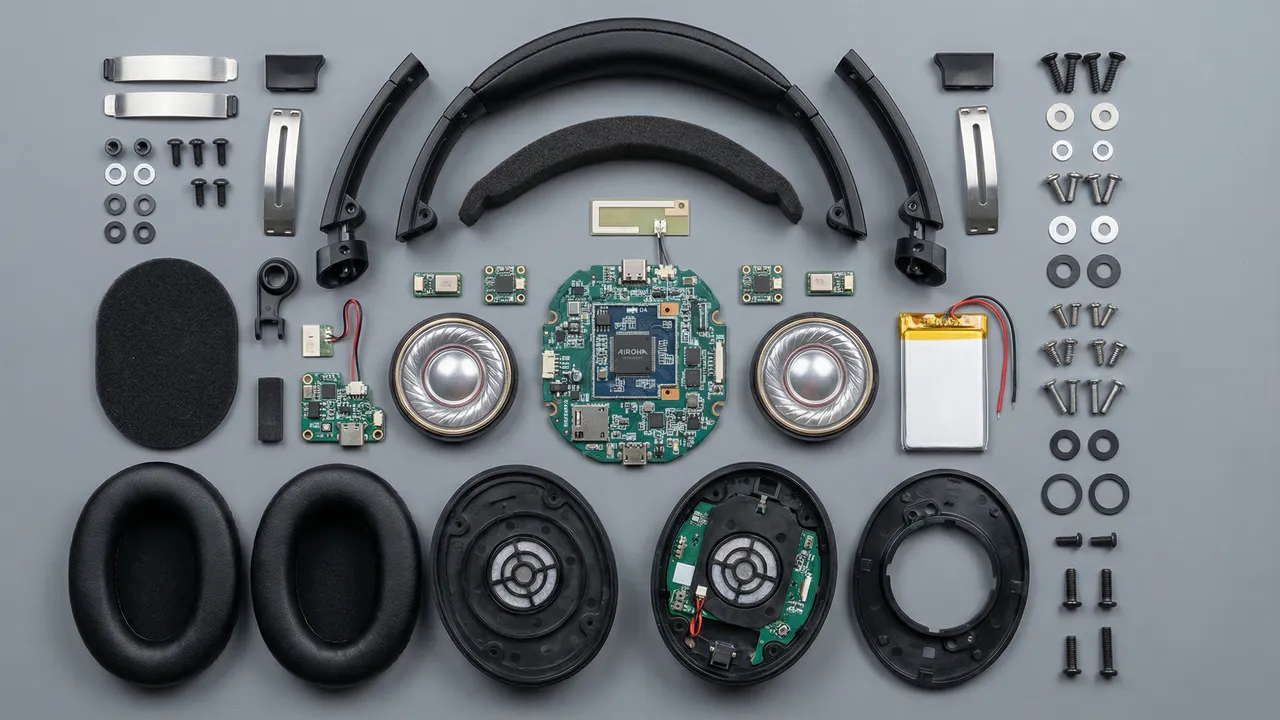
BOM / Cost Breakdown
| Component | Material | Cost Share | Notes |
|---|---|---|---|
| Bluetooth chipset (e.g., Airoha AB1562A) | - | 18 | Mid-tier SoC at $1.20-1.80; includes RF front-end, DAC, and ANC DSP. Budget JieLi JL6925A drops to $0.35-0.55 (8-10% of BOM). |
| Speaker drivers (40mm dynamic, matched pair) | - | 14 | PET diaphragm pair $0.30-0.60; titanium-coated PET $0.60-1.20. Driver matching within ±3 dB adds $0.05-0.10 per pair at QC stage. |
| Li-Po battery (500-800mAh cell) | - | 12 | Generic cells $0.80-1.50; EVE Energy branded $1.20-2.00. UN 38.3 certified cells required for air freight — non-certified cells add $3K-5K in testing. |
| ANC microphone array (2-4 MEMS mics) | - | 8 | Goertek S15OB381 at $0.15-0.30 each for feedforward; Infineon IM73A135V01 at $0.50-0.90 for hybrid systems. Total per unit: $0.60-3.60 depending on mic count. |
| Housing and headband (ABS or aluminum) | - | 15 | ABS injection molded set $0.80-1.50 including headband; aluminum alloy CNC set $3.00-8.00. Mold amortization adds $0.15-0.30 at 5K unit runs. |
| Ear cushions and padding | - | 7 | PU leather + standard foam $0.30-0.60/pair; protein leather + memory foam $0.80-1.50. Cushion replacement availability extends product lifecycle by 12-18 months. |
| PCB, antenna, and passive components | - | 11 | 4-layer FR4 PCB $0.20-0.50; ceramic BT antenna $0.08-0.15; passive component BOM (capacitors, resistors, inductors) $0.15-0.30 total. |
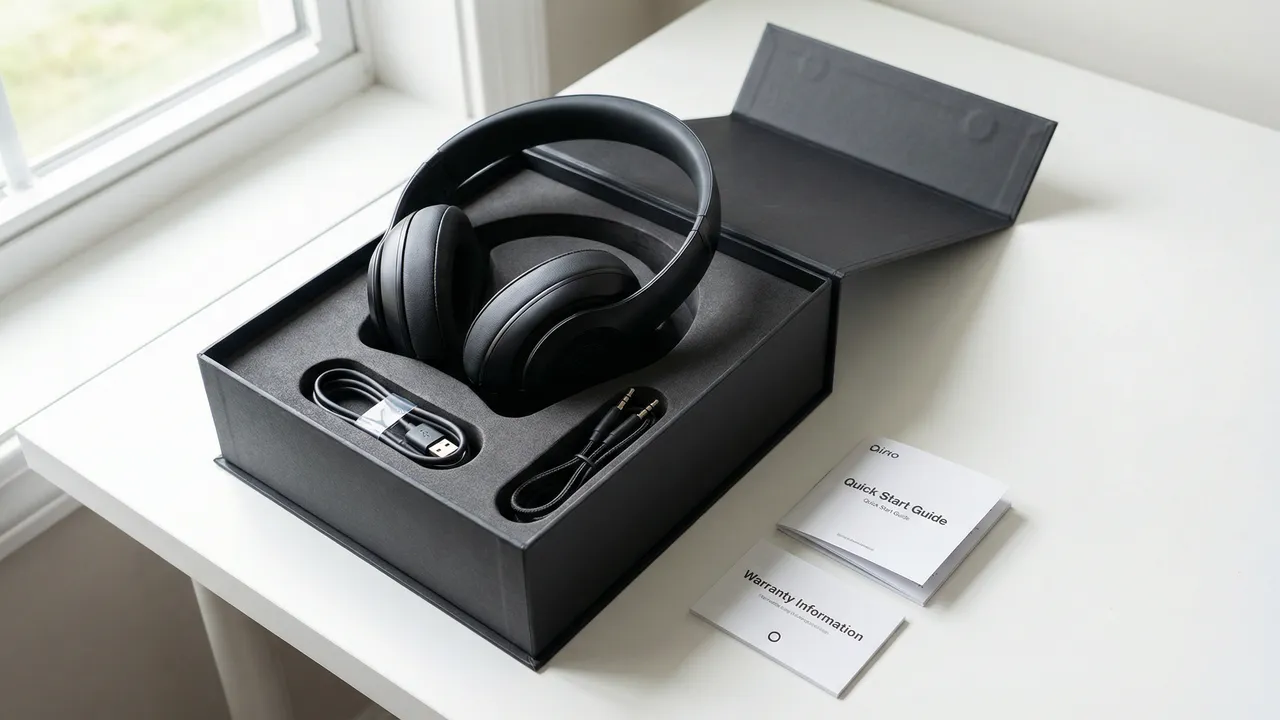
| Packaging, cables, and accessories | - | 15 | Retail box with foam insert $0.40-0.90; USB-C cable $0.15-0.30; 3.5mm aux cable $0.10-0.20; silicone ear tips (3 sizes) $0.12-0.25. Custom packaging artwork setup $150-300. Assembly labor $0.35-0.70 per unit at Shenzhen wage rates; includes soldering, driver mounting, acoustic tuning, functional test, and packing. Overtime surcharge 15-25% during Q3 peak. |
Key Component Specs
| Component | Tier | Model | Price (USD) | Notes |
|---|---|---|---|---|
| Bluetooth chipset | Budget | JieLi JL6925A | $$0.35-0.55 | Zhuhai-based silicon. BT 5.1, basic SBC codec, no ANC DSP. Suitable for promotional and airline amenity products. Distributor MOQ: 1,000 reels. |
| Bluetooth chipset | Budget | JieLi JL6983 | $$0.50-0.80 | BT 5.3, supports AAC codec, basic single-mic noise cancellation. Step-up from JL6925A for budget retail products targeting $15-25 price point. |
| Bluetooth chipset | Mid | Airoha AB1562A | $$1.20-1.80 | Hybrid ANC with dual feedforward+feedback microphones. AAC and SBC codecs. Distributed via Taiwan-headquartered distributors with Shenzhen branch offices. |
| Bluetooth chipset | Mid | Airoha AB1568 | $$1.50-2.20 | AB1562A successor adding multipoint connectivity for simultaneous device pairing. Popular in the Amazon $30-50 retail bracket. |
| Bluetooth chipset | mid-premium | Airoha AB1577 | $$2.00-2.80 | BT 5.4 with LE Audio and Auracast broadcast support. Future-proofs inventory through 2027-2028 retail cycles. |
| Bluetooth chipset | Mid | BES2600 | $$1.80-2.50 | Shanghai-based Bestechnic (恒玄). BT 5.3 with LE Audio codec support. Distributed through Shanghai-based agents. |
| Bluetooth chipset | Premium | Qualcomm QCC3071 | $$2.50-3.50 | aptX Adaptive codec. Requires approved ODM relationship — cannot purchase on open market without Qualcomm customer account (4-8 weeks to establish). |
| Bluetooth chipset | Premium | Qualcomm QCC5181 | $$4.00-6.00 | aptX Lossless with Snapdragon Sound certification. Flagship tier for $80-150 retail products. Certification cost barrier ($8K-40K QDID) limits competition. |
| Speaker driver (40mm) | Budget | PET diaphragm | $$0.30-0.60/pair | Adequate for speech-focused use and budget music playback. Standard impedance 32 ohm. Matched-pair binning at ±3 dB. |
| Speaker driver (40mm) | Mid | Titanium-coated PET diaphragm | $$0.60-1.20/pair | Improved treble clarity and transient response over bare PET. Sweet spot for $25-60 retail headphones. Specify ±1.5 dB matching for premium builds. |
| Speaker driver (40mm) | Premium | Bio-cellulose diaphragm | $$1.50-3.00/pair | Warm, natural frequency profile favored by audiophile brands. Sourced from specialized Dongguan driver manufacturers. |
| Battery (Li-Po) | Budget | Generic Li-Po 500-800mAh | $$0.80-1.50 | Uncertified generic cells risk UN 38.3 non-compliance. Actual capacity often 70-85% of rated mAh. Cross-check cell weight: 500mAh should weigh 9-12 grams. |
| Battery (Li-Po) | Mid | EVE Energy ICP series | $$1.20-2.00 | Huizhou-based manufacturer (惠州亿纬锂能). UN 38.3 certified. Consistent capacity at ≥95% of rated mAh. Zhongkai High-Tech Zone sourcing. |
| Battery (Li-Po) | Premium | ATL (Amperex Technology Limited) | $$2.00-4.00 | Consumer-cell parent behind CATL. Used by Apple and Sony in flagship lines. UN 38.3 + IEC 62133-2 certified. Switching cell suppliers mid-production requires recertification (4-6 weeks delay). |
| ANC microphone | Budget | Goertek S15OB381 | $$0.15-0.30/each | Feedforward-only MEMS mic. 2 per unit for basic single-feed ANC. Total ANC mic cost: $0.30-0.60. Adequate for 15-20 dB noise reduction. |
Supplier Comparison
| # | Supplier | Price | MOQ | Lead Time | Response Rate | Rating |
|---|---|---|---|---|---|---|
| 1 | Shantou TongYuYinYueManBu Co., Ltd Fast ShippingFactory DirectPlatform Verified | $9.82-10.61 | 1 | 10 days | 0.9 | 5/5 |
| 2 | Guangzhou YiJue Technology Co., Ltd Best RepurchaseFactory DirectPlatform Verified | $29.00-31.32 | 1 | 15 days | 1 | 5/5 |
| 3 | Shenzhen ZhongLiNeng Technology Co., Ltd Factory DirectPlatform Verified | $28.00-30.24 | 1 | 10 days | 0.9 | 5/5 |
| 4 | Shantou XingKe Electronics Co., Ltd Factory DirectPlatform Verified | $35.00-37.80 | 1 | 10 days | 0.9 | 5/5 |
| 5 | Shenzhen AiTingShuMa Co., Ltd Factory DirectPlatform Verified | $21.80-23.54 | 1 | 10 days | 0.8 | 5/5 |
| 6 | Shantou SaiJin Technology Co., Ltd Factory DirectPlatform Verified | $12.80-13.82 | 1 | 19 days | 0.8 | 5/5 |
| 7 | Shantou GuRaoYuanTongKeYin Electronics Co., Ltd Top SalesFactory Direct | $15.80-17.06 | 1 | 20 days | 0.9 | 5/5 |
| 8 | Shenzhen JinXiuLiangYuan Technology Co., Ltd Factory DirectPlatform Verified | $13.50-14.58 | 1 | 21 days | 0.7 | 5/5 |
| 9 | Shantou MuYin Technology Co., Ltd Factory DirectPlatform Verified | $25.00-27.00 | 1 | 22 days | 0.8 | 5/5 |
| 10 | Shenzhen HaiXiangWang Electronics Co., Ltd Factory DirectPlatform Verified | $13.00-14.04 | 1 | 10 days | 0.8 | 5/5 |
Common Sourcing Mistakes to Avoid
Skipping Bluetooth SIG QDID registration before listing on Amazon
Why it's a problem: Amazon began automated QDID verification checks in late 2025 for electronics categories. Products without valid QDID face delisting and cease-and-desist orders from Bluetooth SIG. End-product listing costs $4K-8K — a fraction of potential lost revenue from account suspension.
What to do instead: Confirm the factory's module holds valid QDID before ordering. File your own end-product Declaration ID (DID) using the pre-qualified module's QDID. Budget $4K-8K and 4-6 weeks lead time. Complete registration before shipping inventory to FBA.
Not verifying chipset identity in production units against the quoted specification
Why it's a problem: Chipset bait-and-switch is the most common fraud vector in Shenzhen headphone manufacturing. A factory quotes Airoha AB1562A ($1.20-1.80) but installs JieLi JL6925A ($0.35-0.55), pocketing $0.65-1.25 per unit. The swap degrades ANC from 25-30 dB to 8-12 dB and cuts Bluetooth range from 15m to 8m.
What to do instead: Include a chipset substitution penalty clause ($0.50/unit) in the PO. Require the chipset purchase invoice from the authorized distributor. Open 3-5 units per batch for visual IC verification. Add chipset check to the pre-shipment inspection scope via QIMA or V-Trust ($250-350/man-day).
Ordering Q4 holiday inventory after August without securing a production slot
Why it's a problem: Standard 25-35 day lead times extend to 40-55 days from August through October. Shipping rates increase 15-30% during the same window. Factories prioritize existing clients with confirmed slots, pushing new orders to November — after the selling window closes.
What to do instead: Place Q4 inventory orders by late June. Negotiate production slot reservations with a 10-15% deposit. Maintain 30-day safety stock buffer for top-selling SKUs. Use March-April post-CNY window for price negotiations when factories run at 60-80% capacity.
Sourcing headphones without realizing the factory sells identical products under its own brand
Why it's a problem: QCY (subsidiary of Dongguan-based Hele Electronics) makes for the Xiaomi ecosystem. Edifier has its own factory but also OEMs. Certain Dongguan factories supply Amazon Basics. Your OEM factory may launch a near-identical SKU at 15-30% lower retail price on the same marketplace, directly competing with your listing.
What to do instead: Negotiate exclusive chipset configurations and custom acoustic tuning profiles locked to your order. Add contractual non-compete clauses covering specified platforms and SKU categories with defined penalty terms. Invest in at least 3 differentiating design elements (unique colorway mold, custom cushion material, branded app) that the factory cannot replicate for house-brand products.
Using generic uncertified Li-Po cells to save $0.50-1.00 per unit on battery cost
Why it's a problem: Generic cells without UN 38.3 certification cannot legally ship by air and risk thermal events. In 2024, US CPSC issued 12 recalls for wireless audio products with non-compliant batteries. A single recall costs $50K-500K+ in notification, retrieval, and disposal — dwarfing the per-unit battery savings.
What to do instead: Require UN 38.3 test summary and IEC 62133-2 certificate dated within 12 months. Verify cell manufacturer markings (EVE Energy at $1.20-2.00/cell or ATL at $2.00-4.00/cell). Budget $5K-18K for independent battery testing if the factory cannot provide current certificates. Cross-check cell weight against rated capacity.
Sourcing Tools
Pre-filled calculators based on this product's data.
Calculate full cost including product, shipping, duties, and fees.
Estimate shipping cost by method, weight, and destination.
Generate a product-specific quality inspection checklist.
Look up tariff rates by HS code for US, EU, and UK.
Sourcing Essentials
Minimum Order Qty
300
Avg. Unit Price
23.81
Price Range
$9.82-$37.80
Est. Weight
0.55
HS Code
8504.40
Certifications
Common Defects
- Bluetooth pairing failure or excessive pairing time
- ANC noise cancellation depth below spec
- Battery capacity below rated specification
- Headband stress fracture at adjustment slider
- Driver channel imbalance between left and right
- USB-C charging port intermittent connection
- Earcup cushion delamination from mounting ring
- Microphone wind noise during voice calls
Customization Options
Sourcing Notes
Shenzhen's Bao'an district concentrates TWS assembly in the Shajing-Fuyong corridor (沙井-福永), where 500+ factories operate within a 12 km radius along Bao'an Boulevard. PCB assembly workshops — over 300 of them — cluster within the same zone, enabling same-day prototype turnaround for PCBA revisions. Injection molding for earphone housings gravitates toward Gongming (光明) in Guangming district, where 200+ tooling shops produce ABS and PC+ABS shells with typical mold lead times of 18-25 days for TWS cases and 25-35 days for over-ear headbands.
Over-ear headphone assembly shifts 30 km northeast to Dongguan, specifically the Chang'an (长安) and Tangxia (塘厦) townships. Chang'an alone hosts 400+ audio assembly lines; Tangxia specializes in the open-ear clip-on form factor that grew 180-250% in 2025. Speaker driver production — 200+ dedicated facilities — also concentrates in Dongguan, producing 40mm to 50mm dynamic drivers at volumes from 10K to 500K units per month.
Battery procurement routes through Huizhou's Zhongkai High-Tech Zone (仲恺高新区), where 150+ lithium polymer plants include EVE Energy (惠州亿纬锂能) and ATL. Sourcing batteries separately from the headphone assembler saves $0.15-0.40 per cell at 5K+ volume, but requires independent UN 38.3 testing ($3K-5K per cell model) and adds 7-12 days of logistics coordination.
Chipset procurement operates through authorized distributor networks, not direct from the silicon vendors. JieLi chips route through Zhuhai-based distributors (typical MOQ 1,000 reels). Airoha silicon moves through Taiwan-headquartered distributors with Shenzhen branch offices in Huaqiangbei's SEG Electronics Market building. BES chips distribute through Shanghai-based agents. Qualcomm QCC-series require an approved ODM relationship — the chipset cannot be purchased on the open market without a Qualcomm customer account, which takes 4-8 weeks to establish.
MOQ structures vary by customization depth. Stock models from factory inventory ship at 50-200 pieces within 3-7 days — suitable for market testing. Semi-custom orders (logo printing via pad print or laser engraving, custom packaging inserts) start at 200-500 units with 7-15 day lead time and a 5-10% price premium. ODM modifications (custom colorways, alternative cushion materials, modified EQ tuning) require 500-2,000 units across 15-30 days at 10-20% above base price. Full OEM with custom molds for unique housing designs demands 3,000-10,000 unit commitment, 45-90 day timeline, and $3K-15K in mold tooling fees that are sometimes refundable against the first production order if volume exceeds 10K units.
Negotiation leverage peaks in March-April (post-CNY), when factories restart with 20-40% idle capacity. One documented negotiation moved QCC3040-based TWS pricing from $14.50 to $11.20 per unit at 3K MOQ by committing to three quarterly reorders within a 12-month purchase agreement. Price locks of 90-180 days are standard; pushing for 12-month locks requires 30% deposit on projected annual volume.
The chipset bait-and-switch remains the most common fraud vector. A factory quotes pricing based on Airoha AB1562A but ships units loaded with JieLi JL6925A — a $1.00+ cost reduction per unit that the factory pockets. Detection requires opening 3-5 units from each production batch and verifying the chipset marking under magnification. Requesting the chipset purchase invoice (from the authorized distributor) with date and quantity matching your order provides a paper trail. Some buyers specify chipset verification as a mandatory pre-shipment inspection step, performed by third-party firms like QIMA or V-Trust at $250-350 per man-day.
Payment terms follow a standard pattern: 30% T/T deposit to initiate production, 70% balance against copy of Bill of Lading or pre-shipment inspection report. New supplier relationships rarely secure better terms. After 3-4 successful orders, buyers can negotiate 20/80 splits or request 60-day payment terms with a 2-3% price adjustment. Letters of credit add $500-1,500 in banking fees but provide recourse if goods fail to meet contracted specifications.
Quality tiers map directly to return rates in the destination market. Budget JieLi-based products without pre-shipment QC generate 8-15% return rates on Amazon; mid-tier Airoha/BES products with AQL 2.5 inspection hold 3-6%; premium Qualcomm builds with 100% functional testing achieve 1-3%. The single highest-ROI quality intervention is specifying metal pin hinges on TWS charging case lids (+$0.30 per unit), which reduces the top return cause — lid hinge failure — by approximately 60%.
Procurement Steps
Market Research & Keyword Validation
Search '蓝牙耳机头戴式' and '蓝牙耳机 降噪' on 1688.com to identify the top 50 listings by sales volume and store rating (4.7+ stars, 3+ years established). Cross-reference with Amazon US Best Sellers in Electronics > Headphones to identify price gaps — a product at $3.50 FOB on 1688 selling at $29.99 retail on Amazon indicates 4-5x markup potential after FBA fees, shipping, and tariffs. Use Google Trends to compare 'bluetooth headphones' vs 'wireless earbuds' vs 'ANC headphones' search volume by region, noting that 'TWS earbuds' dominates Southeast Asian queries while 'over-ear headphones' indexes higher in Northern Europe.
Sample Sourcing & Evaluation
Request 3-5 samples from shortlisted factories across different chipset tiers: one JieLi JL6983-based unit ($1.50-3.00 sample cost), one Airoha AB1562A-based unit ($25-50 sample cost), and one Qualcomm QCC3071-based unit ($40-80 sample cost). Specify that each sample must arrive with the chipset model visible on the IC (no epoxy covering the markings). Test each sample against the 7-point evaluation checklist: chipset verification, Bluetooth range at 10m, battery runtime at 60% volume, ANC attenuation measurement, 50-cycle hinge stress test, magnet retention shake test, and cosmetic inspection. Budget $75-180 total for samples plus $25-60 per shipment via DHL eCommerce.
Factory Audit & Qualification
Schedule on-site visits or commission third-party audits (SGS, Bureau Veritas, or QIMA at $300-500 per man-day) for the top 2-3 factories identified during sampling. Key checkpoints: verify the factory's ISO 9001 certificate is current (not expired, issued by an accredited body); confirm the assembly line matches the quoted capacity (e.g., 8 SMT lines for TWS at 3,000 units/line/day = 24,000 daily capacity); inspect the incoming quality control station for chipset reel verification; check dust-free/ESD-protected soldering areas; and review the past 6 months of FCC/CE test reports from their test lab (CNAS-accredited labs like BACL or Shenzhen CTL preferred). Request references from 2-3 existing export clients and verify via LinkedIn or direct contact.
Order Placement & Contract
Draft the purchase order specifying exact chipset model (e.g., 'Airoha AB1562A, no substitution permitted'), driver specification (40mm titanium-coated PET, impedance 32Ω ±15%), battery capacity (600mAh Li-Po, EVE Energy ICP or equivalent, UN 38.3 certified), and housing material (PC+ABS blend, Pantone color #XXX). Include penalty clauses: $0.50/unit deduction for chipset substitution, 100% replacement for battery safety non-compliance, and 15% discount on next order for lead time exceeding contract by >7 days. Payment terms for first order: 30% T/T deposit upon contract signing, 70% balance against pre-shipment inspection pass report. Specify Incoterms (FOB Shenzhen or CIF destination port) and confirm insurance coverage at 110% of invoice value.
Production QC & Inspection
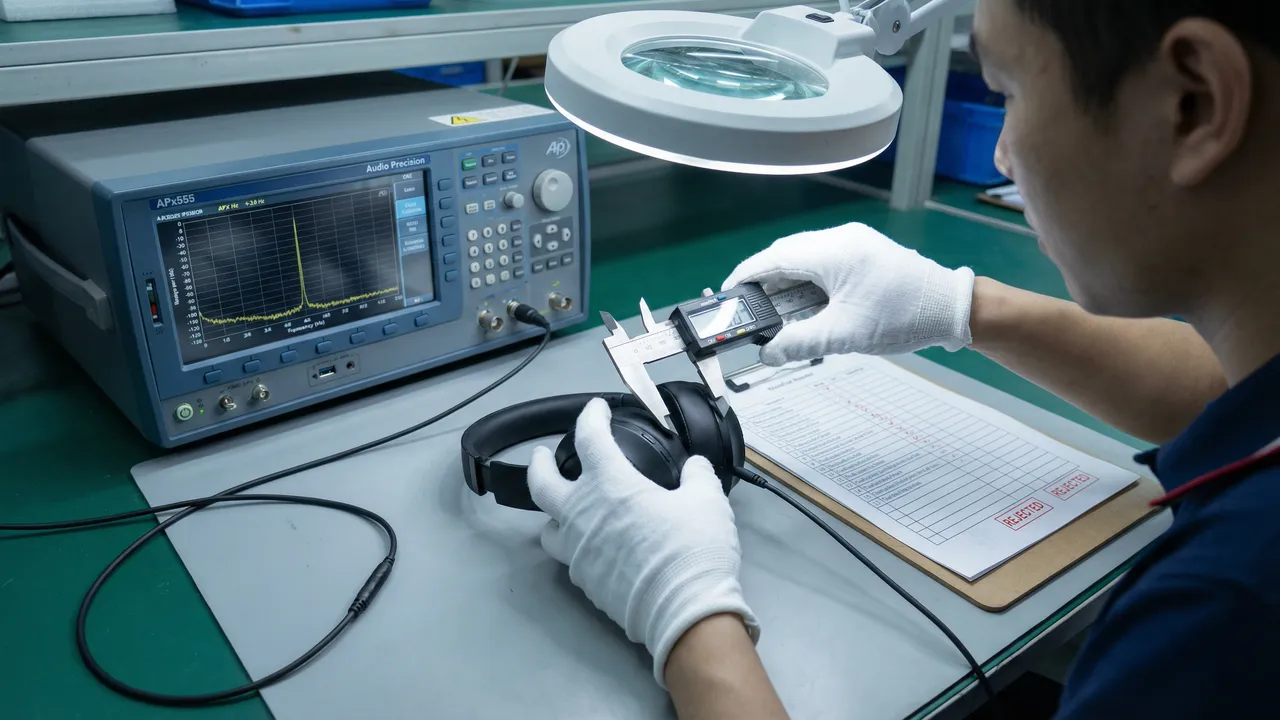
Deploy inline inspection at three stages: initial (when 10-20% of order is complete) to catch systematic defects early, during production (at 50-60%) to verify consistency, and pre-shipment (at 100% completion) for final AQL 2.5 sampling per ISO 2859-1. For a 3,000-unit order, AQL 2.5 Level II requires inspecting 200 units with a maximum of 10 major defects and 14 minor defects for acceptance. Mandatory checks include: Bluetooth pairing time (<3 seconds), left-right audio balance (±3 dB maximum deviation), ANC activation response (<0.5 second latency), charging case lid hinge tension (must hold closed when inverted), and carton drop test (1 carton from 76cm height onto each face, no product damage). Third-party inspection cost: $250-350 per man-day via QIMA or V-Trust, typically 1-2 man-days for orders under 5,000 units.
Shipping & Logistics
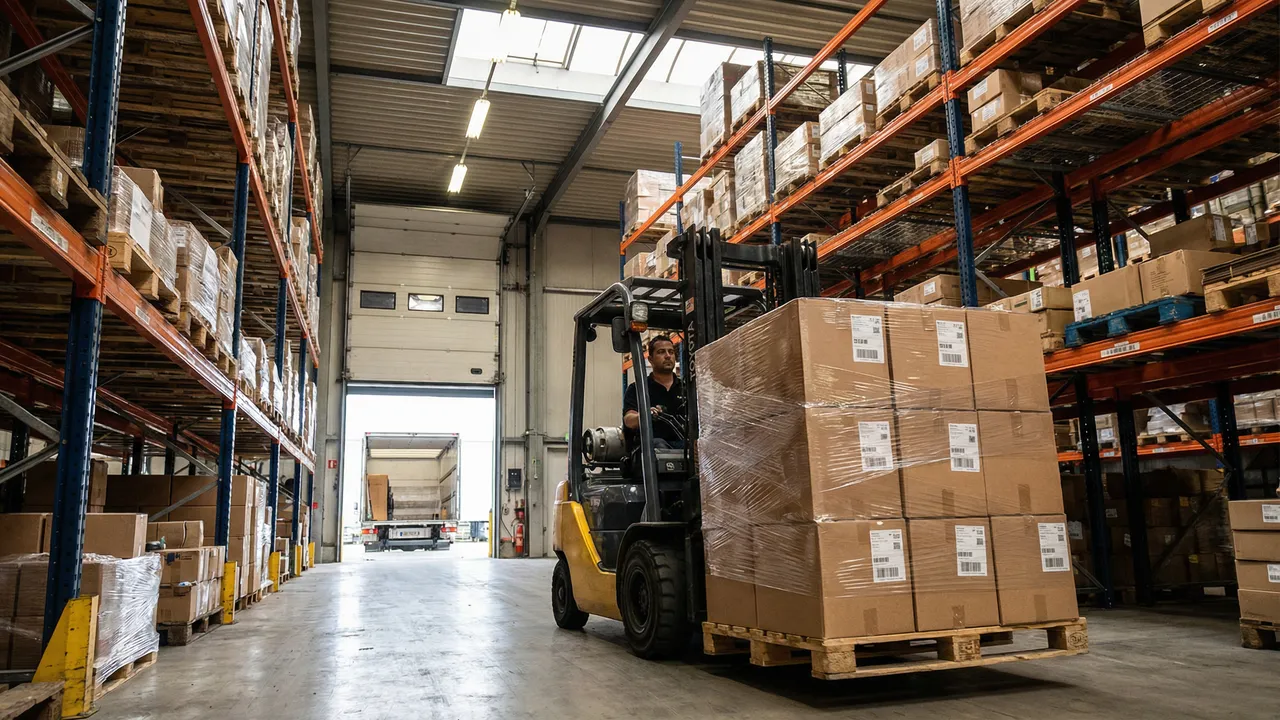
For orders of 3,000-5,000 over-ear headphones (approximately 4-6 CBM, 800-1,200 kg), sea freight LCL from Shenzhen Shekou port to US West Coast runs $0.80-1.50 per unit with 30-45 day transit. FCL (full container) becomes cost-effective above 8,000 units, dropping to $0.35-0.60 per unit via a 20ft container. Li-Po battery shipments require IATA DG (dangerous goods) documentation for air freight, adding $0.30-0.50/kg surcharge and requiring a DG-certified freight forwarder. For Amazon FBA sellers, direct injection services from Shenzhen to FBA warehouses (e.g., ONT8 in Moreno Valley, CA) at $1.20-2.50 per unit include palletization, labeling, and appointment scheduling. Book shipping 7-10 days before production completion to lock rates; spot rates fluctuate 10-20% weekly during peak season (August-October).
Customs Clearance & Delivery
US customs entry requires: FCC grant of equipment authorization (not just a test report — the grant must be registered in the FCC Equipment Authorization System under your Grantee Code); customs bond ($50K single entry at ~$5-10 per $1K of goods value, or continuous bond at $300-500/year); commercial invoice with HTS code 8518.30.20 (headphones/earphones, 0% MFN duty + 7.5% Section 301 tariff); packing list with net/gross weights and carton dimensions; Bill of Lading or Air Waybill; and ISF 10+2 filing (ocean freight, must be filed 24 hours before vessel loading, penalty $5,000-10,000 per violation). EU entry requires CE Declaration of Conformity citing RED 2014/53/EU with the notified body number, WEEE registration in each member state of sale, and REACH SVHC declaration. Engage a licensed customs broker ($50-150 per entry) to avoid classification errors that trigger audit flags.
Shipping Estimates
| Method | Destination | Cost | Transit Days | Notes |
|---|---|---|---|---|
| Sea freight (LCL) | USA West Coast (Los Angeles) | 1.2 | 25 | - |
| Sea freight (LCL) | EU (Rotterdam) | 1.5 | 32 | - |
| Air freight | USA West Coast | 3.5 | 7 | - |
| Air freight | EU (Frankfurt) | 3 | 8 | - |
| Express (DHL/FedEx) | USA | 5.5 | 4 | - |
| Express (DHL/FedEx) | EU | 4.8 | 5 | - |
| Rail freight | EU (Hamburg) | 2 | 18 | - |
| Sea freight (FCL 20ft) | USA East Coast (New York) | 0.55 | 33 | - |
Risk Alerts
Factory quotes Airoha AB1562A ($1.20-1.80) but installs JieLi JL6925A ($0.35-0.55), pocketing $0.65-1.25 per unit. The swapped chipset degrades ANC depth from 25-30 dB to 8-12 dB and drops Bluetooth range from 15m to 8m. Mitigation: require chipset purchase invoice from authorized distributor; open 3-5 units per batch for visual IC verification; specify QIMA or V-Trust chipset check at $280-350 per man-day.
Generic Li-Po cells without UN 38.3 certification cannot legally ship by air and may cause thermal events. In 2024, US CPSC issued 12 recalls for wireless audio products with non-compliant batteries. Mitigation: require UN 38.3 test summary and IEC 62133-2 certificate dated within 12 months; verify cell manufacturer (EVE Energy or ATL markings); budget $5K-18K for independent battery testing.
Your OEM factory simultaneously sells identical or near-identical products under their own Amazon/AliExpress brand at 15-30% lower retail price. QCY and Edifier both originated as OEM shops before building consumer brands. Mitigation: contractual non-compete clause covering specified platforms and SKU categories; custom acoustic tuning profiles exclusive to your order; unique colorway molds not available in factory catalog.
US HTS 8518.30.20 carries 0% MFN duty but 7.5% Section 301 tariff on Chinese-origin headphones. On a $10 FOB unit, this adds $0.75 landed cost. EU CN 8518 30 00 carries 2% duty. Mitigation: factor tariffs into landed cost calculations before setting retail price; monitor Federal Register for tariff modification announcements; consider bonded warehouse entry for deferred duty payment.
Selling Bluetooth products without valid QDID listing exposes the importer to cease-and-desist orders and marketplace delisting. Amazon began automated QDID verification checks in late 2025 for electronics categories. End-product listing costs $4K-8K with a pre-qualified module or $8K-40K for new qualification. Mitigation: confirm factory's module holds valid QDID before ordering; budget for end-product Declaration ID (DID) filing at $4K-8K.
Plastic snap-fit hinges on TWS charging cases fail at 2,000-5,000 cycles, generating the single highest return category (35-45% of all returns). Metal pin hinge upgrade costs +$0.30 per unit and extends lifecycle to 15,000-20,000 cycles, reducing hinge-related returns by approximately 60%. Mitigation: specify metal pin hinge in PO; verify hinge mechanism on pre-production sample with 100-cycle stress test.
Apple AirPods and Sony WH-1000XM series design patents are actively enforced. Factories offering 'AirPods-style' TWS with stem design or 'Sony-style' over-ear with identical headband arc risk customs seizure under Section 337 (US) or EU design right enforcement. Mitigation: modify at least 3 distinct design elements from any reference product; conduct freedom-to-operate search on USD $500-1,500 budget; file own design patent in target market.
Standard 25-35 day production lead times extend to 40-55 days from August through October as factories prioritize Black Friday/Cyber Monday orders. Shipping rates increase 15-30% during the same window. Mitigation: place Q4 inventory orders by late June; negotiate production slot reservations with 10-15% deposit; maintain 30-day safety stock buffer for top-selling SKUs.
Sample Policy
Most Shenzhen and Dongguan headphone factories charge $15-50 per sample for stock models and $50-150 for semi-custom units with logo printing or color changes. Shipping a single sample via DHL/FedEx from Shenzhen to the US costs $25-45 (3-5 business days) or $35-60 to Europe (4-7 business days). Factories typically ship samples within 2-5 days for stock items and 7-15 days for modified variants requiring tooling adjustments. Sample fees are refundable against the first production order at approximately 70% of factories, provided the order meets minimum quantity thresholds — usually 500+ units for semi-custom and 2,000+ for ODM configurations. Request the refund policy in writing before wiring sample payment, as verbal commitments are unenforceable. Every sample received should undergo these numbered tests before approving mass production: 1. Chipset verification — remove the driver cover or open the PCB housing to visually confirm chipset markings match the quoted model (e.g., Airoha AB1562A silk-screened on the IC). Pass: marking matches quote. Fail: different chipset model or unmarked/sanded IC surface. 2. Bluetooth range test — pair with an iPhone or Android device and walk to 10 meters line-of-sight in an open room. Pass: stable audio with zero dropouts at 10m. Fail: audio stuttering or disconnection before 8 meters, indicating antenna design issues or a downgraded RF front-end. 3. Battery runtime validation — fully charge the sample (LED indicator off), play audio at 60% volume via AAC codec, and time until auto-shutdown. Pass: runtime within 85% of the factory's spec sheet claim (e.g., if claimed 30 hours, must reach 25.5+ hours). Fail: runtime below 80% of claimed value. 4. ANC performance check (if applicable) — in a 65-70 dB ambient environment (office with HVAC), activate ANC and measure perceived attenuation using a smartphone SPL meter app at the ear. Pass: ≥15 dB reduction for feedforward ANC, ≥20 dB for hybrid ANC. Fail: ≤10 dB reduction or audible white noise/hiss in ANC mode. 5. Build quality stress test — open and close the TWS charging case lid 50 times, flex the over-ear headband to 150% of head-width extension 20 times, and tug each cable connection point with 1 kg of force for 5 seconds. Pass: no cracking, loosening, or mechanical failure. Fail: lid hinge loosens, headband cracks at stress point, or cable detaches from driver housing. 6. Charging case magnet retention — hold the open case upside down and shake three times. Pass: both earbuds remain seated by magnets. Fail: either earbud falls out, indicating weak magnets ($0.05-0.10 per magnet upgrade solves this). 7. Cosmetic and packaging inspection — check for mold flash on housing seams, uneven paint or UV coating, misaligned printing on packaging, and correct accessory count (cable, ear tips, manual). Pass: zero cosmetic defects visible at arm's length. Fail: visible flash lines, paint bubbles, or missing accessories. Red flags during sample evaluation: factory refuses to send a sample before deposit payment; sample arrives with no brand marking but factory claims it is their 'standard product'; audio quality differs drastically between left and right channels (indicates driver matching issues at ±6 dB or worse); charging case shows different plastics texture between lid and base (suggests mixed mold batches).
Frequently Asked Questions
FOB pricing splits into three chipset tiers. Budget JieLi-based over-ear headphones run $2.00-6.50 per unit at 3K+ MOQ. Mid-tier Airoha AB1562A builds land at $6-20 FOB. Premium Qualcomm QCC3071 models reach $15-45 FOB. Add $18K-35K for minimum US+EU certification (FCC + CE/RED + Bluetooth SIG QDID), spread across your first production run.
Related Resources
Methodology
How this report is assembled.
- Real-time 1688 supplier and offer data collected via API.
- Scoring blends search relevance signals with detailed supplier metrics.
- Data is refreshed regularly; outliers are flagged before surfaced.
Why trust this report
- Source-specific supplier data (not scraped listings).
- Structured QC and logistics considerations embedded in the analysis.
- Designed for sourcing decisions, not just content discovery.
About This Report
Supplymo Research Team
B2B Sourcing Intelligence
8+ years in cross-border sourcing
This report combines real-time 1688 supplier data, proprietary scoring algorithms, and cross-border trade expertise. All supplier scores, pricing, and lead times are verified through live API queries, not estimated or scraped. Updated regularly to reflect current market conditions.
- Supplier scores computed from 11 real-time metrics via 1688 Open API
- Price ranges derived from live search across 4+ query variants per category
- Two-stage supplier ranking: search scoring (40%) + detail API deep evaluation (60%)
Data sourced from 1688.com verified supplier APIs
Request a Sourcing Quote
Share your details and our team will reach out with pricing and next steps.
Trend Score
100
Discussion & Questions
No comments yet. Be the first to share your thoughts!